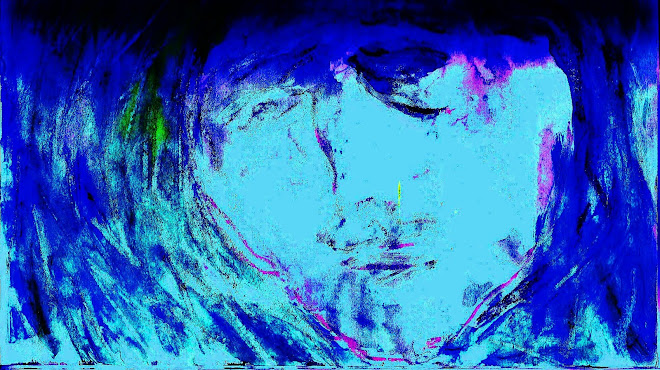
split the atom of fear
Human weakness seduces us to fear. We cannot control fear, so instead we react – by avoiding it, indulging in it, being humbled by it, attempting to defy it. We clench, addict, claim victim, stop believing, abandon ourselves and God.
split
We each perceive fear according to our unique weaknesses. We face the cruel loss of a loved one, suffer to conquer an insidious addiction, are imprisoned by intolerable pain or debilitating disease.
split
Human frailty is predetermined and necessary. Accepting frailty is a requirement for transcending. Christ teaches us in the serene image of suffering He imbued upon the Shroud as His body accepted human death and was released into the new life of the resurrection.
split
The faint and frail image that rests on top of the fibrils mirrors our tenuous nature. The marks of suffering, our fear personified. His calm expression, our salvation assured.
split
And then the unsolvable mystery. No one comprehending the true origin of particles binding the image. We reach out to clench hope and possess resurrection. Answers vanish.
split
the atom of fear
disintegrates
the faint image
dusts
our surfaces of surrender
we collapse by design
into the Divine
where human mirrors God
and frailty trembles
Friday, December 24, 2010
Saturday, December 11, 2010
Chapter 36: Thriving in Arsenic
All life as we know it up to this point requires 6 elements to make DNA and RNA. They are: Oxygen, Hydrogen, Nitrogen, Carbon, Sulfur, and Phosphorous.
A newly discovered bacteria in Mono Lake has arsenic in its biomolecules in lieu of phosphorous. In fact, experiments show that it grows and thrives in arsenic.
Phosphorous is a central component of the energy carrying molecule in all cells, known as Adenosine Triphosphate (ATP). This energy carrying molecule is responsible for the metabolic process.
This newly discovered life form uses some phosphorous, but it has arsenic in its DNA structure, meaning arsenic functions as part of its building blocks for new cells.
Arsenic would kill us (and probably all other life on earth as we know it). Thus, if this discovery proves to have scientific merit, it will be a pivotal discovery in terms of us broadening our definition of what constitutes a life form – here on Earth or elsewhere.
Is this arsenic-consuming life form just one tiny part of the Shadow Biosphere” (a parallel existence of other life forms that are radically different from everything we know of life thus far)?
More to the point where the Shroud is concerned:
Would the discovery of other forms of life in turn mean there are other forms of death?
Death as we know it is defined as the extinguished life force (life force meaning composed of the above 6 elements).
If this bacterium can use arsenic as one of its life-producing elements, then what might be different about how it dies?
The Shroud makes us contemplate death and resurrection. But what if Christ's life form, even though He was human, was in some small way different to ours...would the way he would perish also be different?
What other element/s might have built Christ's DNA and RNA?
And would traces of this/these elements have been left behind on the image on the Shroud?
Could it/they have impacted the carbon dating results?
And what of the relationship between Christ's death and the light of the resurrection...did the Holy Spirit wind the clock of metabolism to add the energy Christ would require to covert to a system of light?
Light is produced at an atomic level when an electron in the atom goes from an excited state of energy (a higher energy orbital) to a state of lower energy.
If the frequency of light that is emitted is a function of the excited particle transitioning to a lower energy quantum mechanical state, is there any relationship between quantum states of energy and the metabolic process of a life form?
“Energy cannot be created or destroyed.”
Can any form of energy be transformed into another form of energy?
Did Christ have superhuman metabolism that enabled Him to intentionally emit thousands or maybe millions of watts for a short time (that lasted maybe only seconds) and for the purpose of completing a superhuman task like resurrection?
The energy stored during photosynthesis as light can be triggered suddenly by a spark in a forest fire or made available more slowly for human metabolism when the molecules are ingested and catabolism is triggered by enzyme action.
Catabolism is the set of pathways that breakdown molecules into smaller units and release energy. As cells break down they create waste and release energy. The creation of this waste is usually an oxidation process involving a release of chemical free energy, some of which is lost as heat, but the rest of which is used to drive the synthesis of adenosine triphosphate.
Could this oxidation process in some way be responsible for the image left on the Shroud?
Could Christ willingly and suddenly trigger a spark that enabled Him to store His energy as light?
life to
death
life to
light
death to
life
death to
light
light to
light
He is the light of the world
A newly discovered bacteria in Mono Lake has arsenic in its biomolecules in lieu of phosphorous. In fact, experiments show that it grows and thrives in arsenic.
Phosphorous is a central component of the energy carrying molecule in all cells, known as Adenosine Triphosphate (ATP). This energy carrying molecule is responsible for the metabolic process.
This newly discovered life form uses some phosphorous, but it has arsenic in its DNA structure, meaning arsenic functions as part of its building blocks for new cells.
Arsenic would kill us (and probably all other life on earth as we know it). Thus, if this discovery proves to have scientific merit, it will be a pivotal discovery in terms of us broadening our definition of what constitutes a life form – here on Earth or elsewhere.
Is this arsenic-consuming life form just one tiny part of the Shadow Biosphere” (a parallel existence of other life forms that are radically different from everything we know of life thus far)?
More to the point where the Shroud is concerned:
Would the discovery of other forms of life in turn mean there are other forms of death?
Death as we know it is defined as the extinguished life force (life force meaning composed of the above 6 elements).
If this bacterium can use arsenic as one of its life-producing elements, then what might be different about how it dies?
The Shroud makes us contemplate death and resurrection. But what if Christ's life form, even though He was human, was in some small way different to ours...would the way he would perish also be different?
What other element/s might have built Christ's DNA and RNA?
And would traces of this/these elements have been left behind on the image on the Shroud?
Could it/they have impacted the carbon dating results?
And what of the relationship between Christ's death and the light of the resurrection...did the Holy Spirit wind the clock of metabolism to add the energy Christ would require to covert to a system of light?
Light is produced at an atomic level when an electron in the atom goes from an excited state of energy (a higher energy orbital) to a state of lower energy.
If the frequency of light that is emitted is a function of the excited particle transitioning to a lower energy quantum mechanical state, is there any relationship between quantum states of energy and the metabolic process of a life form?
“Energy cannot be created or destroyed.”
Can any form of energy be transformed into another form of energy?
Did Christ have superhuman metabolism that enabled Him to intentionally emit thousands or maybe millions of watts for a short time (that lasted maybe only seconds) and for the purpose of completing a superhuman task like resurrection?
The energy stored during photosynthesis as light can be triggered suddenly by a spark in a forest fire or made available more slowly for human metabolism when the molecules are ingested and catabolism is triggered by enzyme action.
Catabolism is the set of pathways that breakdown molecules into smaller units and release energy. As cells break down they create waste and release energy. The creation of this waste is usually an oxidation process involving a release of chemical free energy, some of which is lost as heat, but the rest of which is used to drive the synthesis of adenosine triphosphate.
Could this oxidation process in some way be responsible for the image left on the Shroud?
Could Christ willingly and suddenly trigger a spark that enabled Him to store His energy as light?
life to
death
life to
light
death to
life
death to
light
light to
light
He is the light of the world

Thursday, November 25, 2010
Chapter 35: Thanksgiving
We set aside one day a year to give thanks for all our blessings. We could make the choice to do the opposite and set aside only one day a year to be ungrateful, thereby living in a state of gratitude every other day.
Easier said than done. Our pain and suffering likes to steal the spotlight.
The Shroud teaches us to have the courage to exhibit composure inside suffering. It teaches us to be grateful for the pain Christ endured on our behalf.
Perhaps if we were to make the choice to gaze upon its image everyday, we too would be able to release our pain, reconcile our suffering, and live in a steady state of gratitude.
Easier said than done. Our pain and suffering likes to steal the spotlight.
The Shroud teaches us to have the courage to exhibit composure inside suffering. It teaches us to be grateful for the pain Christ endured on our behalf.
Perhaps if we were to make the choice to gaze upon its image everyday, we too would be able to release our pain, reconcile our suffering, and live in a steady state of gratitude.
Friday, November 19, 2010
Chapter 34: The Face of Forgiveness
The word “sin” has taken on a number of unpleasant connotations. In my mind sin does not equal evil. Sin just means that, as humans, we are fallible. I don't really see it as a negative judgment – God hardwired us with the capacity to exercise our free will to sin, so He probably planned on us doing so.
In this respect, all human wars are essentially an exchange of friendly fire because we are all fighting on the same battlefield where sin is concerned.
Christ knew this was the deal from the get go. His mission was clearly defined: to save us...from ourselves.
Christ bears the eternal burden of human sin so that we are free to redeem ourselves through the eternal love of forgiveness.
In this way, every misstep of ours is another opportunity to learn to forgive ourselves and accept the forgiveness of God, endowed to us by the suffering and sacrifice of Jesus Christ.
We make it surprisingly hard on ourselves and become our own worst enemy by judging ourselves as wrong for backsliding. I don't believe God created us as “wrong” or lets us suffer for sport. But in giving us the capacity and choice to sin, He in turn gives us the capacity and choice to forge a deeper relationship with Him, one wherein we can choose to re-gift our free will...back to Him.
And when we do that, He moves into a very deep place inside us. There we are sheltered and freed from the bonds of living as our unhappy self, the one who is trapped by egocentric bad habits like cruelty, greed, stupidity, weakness, fear... the list goes on.
Our faith is never forced; we are not required to believe in any God or religion. Our guilt for being less than perfect is self-inflicted because forgiveness is already a done deal.
Once we invite Him in, we become the best possible rendering of ourselves. That doesn't mean we won't backslide every once in awhile, spiraling down the tunnel of our imperfection, but we will recognize and remedy it much more quickly by forgiving ourselves. We will place ourselves in His hands by folding ours together to pray for the strength to be better.
The image on the cloth of the Shroud is a road map of the capacity for human sin. The record of torture and suffering is encoded in a way that we can witness but cannot explain.
But the face...the face is the gift of the serenity of forgiveness. In gazing upon it, we fall into His protection, into our innate purity, into the divine remedy within...
In this respect, all human wars are essentially an exchange of friendly fire because we are all fighting on the same battlefield where sin is concerned.
Christ knew this was the deal from the get go. His mission was clearly defined: to save us...from ourselves.
Christ bears the eternal burden of human sin so that we are free to redeem ourselves through the eternal love of forgiveness.
In this way, every misstep of ours is another opportunity to learn to forgive ourselves and accept the forgiveness of God, endowed to us by the suffering and sacrifice of Jesus Christ.
We make it surprisingly hard on ourselves and become our own worst enemy by judging ourselves as wrong for backsliding. I don't believe God created us as “wrong” or lets us suffer for sport. But in giving us the capacity and choice to sin, He in turn gives us the capacity and choice to forge a deeper relationship with Him, one wherein we can choose to re-gift our free will...back to Him.
And when we do that, He moves into a very deep place inside us. There we are sheltered and freed from the bonds of living as our unhappy self, the one who is trapped by egocentric bad habits like cruelty, greed, stupidity, weakness, fear... the list goes on.
Our faith is never forced; we are not required to believe in any God or religion. Our guilt for being less than perfect is self-inflicted because forgiveness is already a done deal.
Once we invite Him in, we become the best possible rendering of ourselves. That doesn't mean we won't backslide every once in awhile, spiraling down the tunnel of our imperfection, but we will recognize and remedy it much more quickly by forgiving ourselves. We will place ourselves in His hands by folding ours together to pray for the strength to be better.
The image on the cloth of the Shroud is a road map of the capacity for human sin. The record of torture and suffering is encoded in a way that we can witness but cannot explain.
But the face...the face is the gift of the serenity of forgiveness. In gazing upon it, we fall into His protection, into our innate purity, into the divine remedy within...
Friday, October 29, 2010
Chapter 33: Divine Bioluminescence
So...was Jesus Christ a giant firefly?
Kidding -- but I do have my usual list of questions about bioluminescence because I cannot imagine that the tomb and surrounding area could have survived a normal blast of radiation.
And the image on the Shroud evokes, and seems to have assimilated, certain unique properties of light.
~~~~~~~~~~~~~~~~~~~~~~~~~~~~~~~~~~~~~~~~~~
Jesus the living light...
Was Christ a symbiotic organism that generated light by way of being carried inside the larger organism of God?
Did His internal chemistry convert to light energy rather than heat energy?
Did His body undergo an enzyme-catalyzed chemiluminescence reaction?
Did a luciferase enzyme oxidize a luciferin, thus leaving behind a kind of light-emitting biological pigment capable of “staining” the image onto the cloth of the Shroud?
Did luciferins share the use of reactive oxygen species (ROS) generated by ionizing radiation, thus creating light-emitting pigments that played a role in His cell signaling and caused cold light emission?
Did the presence of unpaired valence shell electrons cause the ROS to be highly reactive?
If less than 20% of the light energy of Christ during the Resurrection generated thermal radiation, did He adapt His genes to be turned on for light production at a high cell density in some kind of quorum sensing process?
Is the reason no one witnessed the light during the moment of His resurrection because the total light emitted by bioluminescence is not detectable by the human eye?
If the apostles had in their possession a Charge Coupled Device (CCD) camera, would they have been able to record (from an external vantage point) a digital image of His divine bioluminescence during the Resurrection?
Is the image on the Shroud a residue of a biological pigment unlike any other because of its Divine origin?
~~~~~~~~~~~~~~~~~~~~~~~~~~~~~~~~~~~~~~~~~~~~
Living organisms hold unique manifestations of biology and chemistry.
Certainly Jesus as the “Light of the World” could extend beyond all we profess to know about past, present, and future forms of life.
Perhaps He expresses unknown properties of a living organism beyond our ability to fathom...one who left behind trace evidence – of His living and suffering and dying and rising – in the imprint on the Shroud on Turin...
Kidding -- but I do have my usual list of questions about bioluminescence because I cannot imagine that the tomb and surrounding area could have survived a normal blast of radiation.
And the image on the Shroud evokes, and seems to have assimilated, certain unique properties of light.
~~~~~~~~~~~~~~~~~~~~~~~~~~~~~~~~~~~~~~~~~~
Jesus the living light...
Was Christ a symbiotic organism that generated light by way of being carried inside the larger organism of God?
Did His internal chemistry convert to light energy rather than heat energy?
Did His body undergo an enzyme-catalyzed chemiluminescence reaction?
Did a luciferase enzyme oxidize a luciferin, thus leaving behind a kind of light-emitting biological pigment capable of “staining” the image onto the cloth of the Shroud?
Did luciferins share the use of reactive oxygen species (ROS) generated by ionizing radiation, thus creating light-emitting pigments that played a role in His cell signaling and caused cold light emission?
Did the presence of unpaired valence shell electrons cause the ROS to be highly reactive?
If less than 20% of the light energy of Christ during the Resurrection generated thermal radiation, did He adapt His genes to be turned on for light production at a high cell density in some kind of quorum sensing process?
Is the reason no one witnessed the light during the moment of His resurrection because the total light emitted by bioluminescence is not detectable by the human eye?
If the apostles had in their possession a Charge Coupled Device (CCD) camera, would they have been able to record (from an external vantage point) a digital image of His divine bioluminescence during the Resurrection?
Is the image on the Shroud a residue of a biological pigment unlike any other because of its Divine origin?
~~~~~~~~~~~~~~~~~~~~~~~~~~~~~~~~~~~~~~~~~~~~
Living organisms hold unique manifestations of biology and chemistry.
Certainly Jesus as the “Light of the World” could extend beyond all we profess to know about past, present, and future forms of life.
Perhaps He expresses unknown properties of a living organism beyond our ability to fathom...one who left behind trace evidence – of His living and suffering and dying and rising – in the imprint on the Shroud on Turin...
Saturday, October 23, 2010
Chapter 32: Spiritual No Man's Land
Evidence of wounds and blood on the Shroud reflect the historical Jesus. But the Shroud is much more than a record. Something else draws us to yearn. Something buried in the image challenges us to delve into a deeper exploration of human suffering.
If we break it down, human suffering usually comes in any or all of 3 forms: physical, psychological, and spiritual.
Physical encompasses things like pain, hunger, homelessness, illness, poverty, torture.
Psychological includes any emotionally based suffering, such as loss, loneliness, grief, depression, mental disorders, emotional abuse, victimization, or any moral dilemmas we grapple with, such as guilt, greed, and hunger for power and control.
Spiritual suffering can be somewhat amorphous in that, although it affects us physically and emotionally, it is rooted in the deeper crevices of our being. The 'tormented soul' terrain, as it were. The part of us that asks the bigger questions like:
“Why am I here?”
“What is my purpose?”
“What does it all mean or matter?”
And then there is spiritual no man's land...the place where absolute desperation predicates surrender.
At some juncture, life invariably traps us in unhappiness and holds us hostage. Here we appreciate our blessings, while simultaneously knowing the fear of certain suffering to come. Every moment feels laced with a kind of dread about human life on earth. We sense a life beyond and our spirits crave what is next, because what is here has become all too mundane and unbearable. Yet, we are stuck... in this no man's land, this limbo of the soul.
And then the joy begins to drain out of everything. Life begins to flatten, deflate. It's not that we don't feel moments of joy or recognize life's beauty...it's that it's not enough anymore. We long for more vibrant colors, sounds, and breezes that magically transport us to that higher place and grant us passage (instead of just getting glimpses of it in our dreams).
Our attachment to life has lost its grip and there is no turning back. And then the reality looms...that we are trapped here until we die (which might be decades). And we wonder why our minds would mess with us like this.
Our suffering has retracted to its most elemental source. Our desperation is now truly insurmountable. Dead Sea salt burns in our wounds. The narrative of pain ceases and is replaced by an eerie clenching of the soul.
Our experience of fear spirals down into the confines of self and life. There is no pretense – and nothing we have ever done prior will help us find our way out. We try to tell ourselves it is all illusion and just a trick of the mind. And maybe it is...but still we are living that illusion.
By ringing out every last teardrop of our fabric of suffering in hopes of controlling our experience of life, we nullify it as a last resort. We figure, “ If we stop feeling life it can't hurt us.” That is, of course, not true – but it feels safe to take power over suffering and simply refuse it and rather insist: “Unless life is happy and easy and pain free, we don't want to live it.”
As victims of our own human weakness, we do not wish to hurt ourselves or others, but we are not going to play this futile game either. We deem suffering as unacceptable. We refuse to accommodate it as a necessary part of spiritual growth or human life.
Lurking, as if to spite us, the realization of our predicament creeps in and we learn to dread succeeding in life because then we have too much to lose. We stagnate our lives to escape loss and pain, only to discover that frozen living is equally fraught with suffering.
and the trap snaps shut
When suffering gets the best of us it means that we give it the upper hand. We give it free reign over our life force. We give it omniscient power over our free will.
If the Shroud teaches us anything it is that human suffering does not have the upper hand. Thus, how we reconcile our suffering is what really matters. If we use our free will to go through the portal willingly, like Christ did, then we go through consciously.
Fully conscious suffering seems impossible, beyond our capacity. Usually people claim they are too weak and pick up the bottle or start taking drugs or doing something — anything to cope.
Or, when all our adult mechanisms have been zapped of their effectiveness, we revert to primal coping mechanisms to resolve our fears. In childhood and through our formative years we have imaginary experiences of fear and, often, an acute feeling of low self-esteem. We don't know if we are “OK” because we are just out the gate in this race called life and we have no direct awareness of our own speed or capabilities. We just start racing and discover ourselves as we go.
After years of self discovery, we realize there is no self. It is then we may feel the nudge to reside wherever we are best suited to loving God...and let the rest take care of itself.
No matter the causes (and there are many), the place of desperation can be our ironic entry to authentic freedom and surrender. When we trust and let God take over, we loosen our grip on our pain and suffering. We ask Him to be the one to move our lives forward, because we have finally admitted we are absolutely incapable of handling it alone.
“Into your hands, I commend my spirit”
The image on the Shroud is one of calm and peaceful release. It is the image of a man who navigated His way through the desert of spiritual no man's land...a man who transcended human suffering by surrendering to God.
~~~~~~~~~~~~~~~~~~~~~~~~~~~~~~~~~~~~
the cry low deep
an edge too steep
you dive into density
absorbing a black hole
compressing mass
swallowing darkness
there the awakening fright
you are your own prisoner
solo
at the bottom of self
in the place of never happy
true surrender animates freedom
once you admit that alone you cannot
giving up
giving in
you beckon
Lord
pull me
past panic
corner me
in desperation
ruin me
in fear
purify me
in your image
magnetize me
in your might
mold my clay of gravity
transfigure me into light
If we break it down, human suffering usually comes in any or all of 3 forms: physical, psychological, and spiritual.
Physical encompasses things like pain, hunger, homelessness, illness, poverty, torture.
Psychological includes any emotionally based suffering, such as loss, loneliness, grief, depression, mental disorders, emotional abuse, victimization, or any moral dilemmas we grapple with, such as guilt, greed, and hunger for power and control.
Spiritual suffering can be somewhat amorphous in that, although it affects us physically and emotionally, it is rooted in the deeper crevices of our being. The 'tormented soul' terrain, as it were. The part of us that asks the bigger questions like:
“Why am I here?”
“What is my purpose?”
“What does it all mean or matter?”
And then there is spiritual no man's land...the place where absolute desperation predicates surrender.
At some juncture, life invariably traps us in unhappiness and holds us hostage. Here we appreciate our blessings, while simultaneously knowing the fear of certain suffering to come. Every moment feels laced with a kind of dread about human life on earth. We sense a life beyond and our spirits crave what is next, because what is here has become all too mundane and unbearable. Yet, we are stuck... in this no man's land, this limbo of the soul.
And then the joy begins to drain out of everything. Life begins to flatten, deflate. It's not that we don't feel moments of joy or recognize life's beauty...it's that it's not enough anymore. We long for more vibrant colors, sounds, and breezes that magically transport us to that higher place and grant us passage (instead of just getting glimpses of it in our dreams).
Our attachment to life has lost its grip and there is no turning back. And then the reality looms...that we are trapped here until we die (which might be decades). And we wonder why our minds would mess with us like this.
Our suffering has retracted to its most elemental source. Our desperation is now truly insurmountable. Dead Sea salt burns in our wounds. The narrative of pain ceases and is replaced by an eerie clenching of the soul.
Our experience of fear spirals down into the confines of self and life. There is no pretense – and nothing we have ever done prior will help us find our way out. We try to tell ourselves it is all illusion and just a trick of the mind. And maybe it is...but still we are living that illusion.
By ringing out every last teardrop of our fabric of suffering in hopes of controlling our experience of life, we nullify it as a last resort. We figure, “ If we stop feeling life it can't hurt us.” That is, of course, not true – but it feels safe to take power over suffering and simply refuse it and rather insist: “Unless life is happy and easy and pain free, we don't want to live it.”
As victims of our own human weakness, we do not wish to hurt ourselves or others, but we are not going to play this futile game either. We deem suffering as unacceptable. We refuse to accommodate it as a necessary part of spiritual growth or human life.
Lurking, as if to spite us, the realization of our predicament creeps in and we learn to dread succeeding in life because then we have too much to lose. We stagnate our lives to escape loss and pain, only to discover that frozen living is equally fraught with suffering.
and the trap snaps shut
When suffering gets the best of us it means that we give it the upper hand. We give it free reign over our life force. We give it omniscient power over our free will.
If the Shroud teaches us anything it is that human suffering does not have the upper hand. Thus, how we reconcile our suffering is what really matters. If we use our free will to go through the portal willingly, like Christ did, then we go through consciously.
Fully conscious suffering seems impossible, beyond our capacity. Usually people claim they are too weak and pick up the bottle or start taking drugs or doing something — anything to cope.
Or, when all our adult mechanisms have been zapped of their effectiveness, we revert to primal coping mechanisms to resolve our fears. In childhood and through our formative years we have imaginary experiences of fear and, often, an acute feeling of low self-esteem. We don't know if we are “OK” because we are just out the gate in this race called life and we have no direct awareness of our own speed or capabilities. We just start racing and discover ourselves as we go.
After years of self discovery, we realize there is no self. It is then we may feel the nudge to reside wherever we are best suited to loving God...and let the rest take care of itself.
No matter the causes (and there are many), the place of desperation can be our ironic entry to authentic freedom and surrender. When we trust and let God take over, we loosen our grip on our pain and suffering. We ask Him to be the one to move our lives forward, because we have finally admitted we are absolutely incapable of handling it alone.
“Into your hands, I commend my spirit”
The image on the Shroud is one of calm and peaceful release. It is the image of a man who navigated His way through the desert of spiritual no man's land...a man who transcended human suffering by surrendering to God.
~~~~~~~~~~~~~~~~~~~~~~~~~~~~~~~~~~~~
the cry low deep
an edge too steep
you dive into density
absorbing a black hole
compressing mass
swallowing darkness
there the awakening fright
you are your own prisoner
solo
at the bottom of self
in the place of never happy
true surrender animates freedom
once you admit that alone you cannot
giving up
giving in
you beckon
Lord
pull me
past panic
corner me
in desperation
ruin me
in fear
purify me
in your image
magnetize me
in your might
mold my clay of gravity
transfigure me into light
Saturday, October 16, 2010
Chapter 31: Search Engines for God
In our current Age of Accessibility the evolution of mankind has made an exponential leap thanks to the computer and the Internet.
Children born into the world now will never really know what it is like not to have at their disposal access to information about everything. They will never know how almost impossible it used to be to travel to strange and foreign lands. They will not be denied access to global information, photographs, videos, and news. Children born into this world now are essentially drop-kicked into life's complexities and their medium for learning is the search engine.
Each human being is, in and of him/herself a kind of search engine and operates like a search engine in the quest to know (or deny) God.
Outreach and Inreach
The farther outward we are able to reach to access information to understand our existence, we will equally reach farther inward to access the same. Thus, one's external capabilities and obsession with an Internet search engine is the mirrored reflection of our internal evolution and our insistence in accessing God through the search engine of one's self.
The Shroud, unlike anything else, is the manifestation of the fusion of the external and internal search engines. It mysteriously lures us towards its vortex-like pathway to God. No human mind in our world has been able to crack the code and access all the necessary information about how the image was formed or how it could be reproduced. The Shroud helps us to appreciate the layers upon layers of complexity and simplicity of our cosmos and the omniscience of God.
When we take everything we know, of Christ's life, of the Gospels, of the Bible, of the sciences, of religion, of history, of physics we fall down the rabbit hole into the image on the Shroud, searching for God through the light of the Resurrection of Christ.
Children born into the world now will never really know what it is like not to have at their disposal access to information about everything. They will never know how almost impossible it used to be to travel to strange and foreign lands. They will not be denied access to global information, photographs, videos, and news. Children born into this world now are essentially drop-kicked into life's complexities and their medium for learning is the search engine.
Each human being is, in and of him/herself a kind of search engine and operates like a search engine in the quest to know (or deny) God.
Outreach and Inreach
The farther outward we are able to reach to access information to understand our existence, we will equally reach farther inward to access the same. Thus, one's external capabilities and obsession with an Internet search engine is the mirrored reflection of our internal evolution and our insistence in accessing God through the search engine of one's self.
The Shroud, unlike anything else, is the manifestation of the fusion of the external and internal search engines. It mysteriously lures us towards its vortex-like pathway to God. No human mind in our world has been able to crack the code and access all the necessary information about how the image was formed or how it could be reproduced. The Shroud helps us to appreciate the layers upon layers of complexity and simplicity of our cosmos and the omniscience of God.
When we take everything we know, of Christ's life, of the Gospels, of the Bible, of the sciences, of religion, of history, of physics we fall down the rabbit hole into the image on the Shroud, searching for God through the light of the Resurrection of Christ.
Subscribe to:
Posts (Atom)