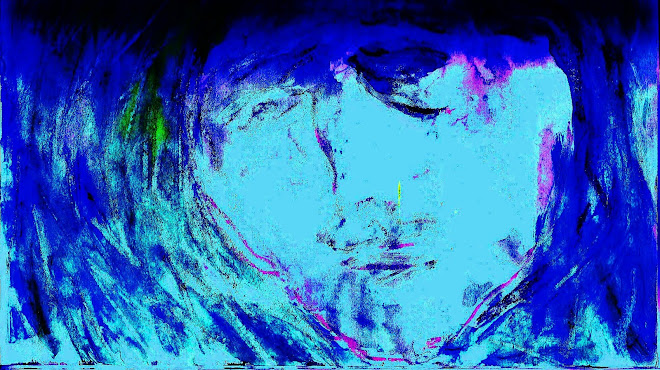
Lord, your peace holds all suffering
Faith is, presumably, based on trust. We can't fully have faith without trust. So then how is it that we waver, even for a moment, in trusting a man who sacrificed His life for our salvation? A man who suffered and endured relentless torture and pure evil on our behalf?
Is our doubt connected to our free will? Do we feel we are jeopardizing our free will when we release our lives and surrender our will to the will of God? When we offer up what is in our control, do we feel we have been undermined or duped? Is that why it is so hard for us to trust?
Is our doubt in unequivocal trust merely our free will exposing its deepest fear? Or is trust the only true and pure expression of free will?
Christ suffering, Christ dying – these were choices based on trust. It is wildly ironic that we marvel at His trust but doubt our own.
And still, in moments of our most dire suffering (individual or collective) we are surrounded, embraced, absorbed, folded into the gift of perfect peace. .. a gift that Christ earned for us through using His free will to surrender doubt and simply trust.
It is no wonder that some doubt that the image on the Sindone is an instrument of the trust Christ shrouds us with, enfolding us into His forever peace.
Tuesday, February 1, 2011
Friday, January 7, 2011
Chapter 39: Compressed Reality
The cloth of the Shroud and the image on the Shroud are two separate realities.
Microscopic images of the threads and fibers show us the multiple layers that make up the fabric that lies beneath the image. God is the omniscient transparency that constitutes and permeates every layer of scaffolding supporting the image resting on the fibrils.
In the image, an exponential compression of the energy that is God presents us with myriad complexities. It is as though we are being shown that God can expand and contract to levels far beyond what we can comprehend in this reality called human life.
It is comical to think that, among all the man made cathedrals and churches, statues and icons, just a scrap of cloth in the universal scheme of things was His chosen, fragile vehicle for ultimate power. His tortured imprint and the super-charged density of His resurrection remind us that suffering is frail and God's power is supreme.
Both the image and the cloth have been subjected to intense research, study, and scrutiny. Oddly, though, many people fixate on the carbon dating results of the cloth. Regardless if one is using those results to profess that the image is a fake or if one is arguing that the results are flawed, the age of the cloth remains the primary focus for many experts.
Let's assume the carbon dating results are valid and the cloth dates to the Middle Ages – how is that proof that the image is not that of the crucified Christ? That kind of logic would be similar to locking someone in a pitch black room and convincing the person that it is night time, when in actuality the sun is brightly shinning. We cannot manipulate time and reality to stop the sun from shinning simply by placing it in a context where it appears to be absent or by adamantly insisting that it is not shinning.
Likewise, even if we were able to prove beyond a shadow of a doubt that the carbon dating results are flawed and that the cloth does indeed date back to the first century, we still have no proof that the image is Christ's or any explanation for how it got onto the cloth.
Our human timeline is our tracking device for shaping our history. God has no history. His fabric always was and always is and always will be.
The cloth itself, no matter its age, is merely the proof that we have no proof. We only have the shinning sun of our freely chosen (or not chosen) faith.
Why do we compress reality by assuming that Christ wanted us to solve the mystery of the Shroud?
Perhaps He simply wanted to grace us with proof... that our faith reality (like His image on the cloth) is at once our vast mystery and the black hole density in His forever-never, simultaneously contracting and expanding schematic.
Microscopic images of the threads and fibers show us the multiple layers that make up the fabric that lies beneath the image. God is the omniscient transparency that constitutes and permeates every layer of scaffolding supporting the image resting on the fibrils.
In the image, an exponential compression of the energy that is God presents us with myriad complexities. It is as though we are being shown that God can expand and contract to levels far beyond what we can comprehend in this reality called human life.
It is comical to think that, among all the man made cathedrals and churches, statues and icons, just a scrap of cloth in the universal scheme of things was His chosen, fragile vehicle for ultimate power. His tortured imprint and the super-charged density of His resurrection remind us that suffering is frail and God's power is supreme.
Both the image and the cloth have been subjected to intense research, study, and scrutiny. Oddly, though, many people fixate on the carbon dating results of the cloth. Regardless if one is using those results to profess that the image is a fake or if one is arguing that the results are flawed, the age of the cloth remains the primary focus for many experts.
Let's assume the carbon dating results are valid and the cloth dates to the Middle Ages – how is that proof that the image is not that of the crucified Christ? That kind of logic would be similar to locking someone in a pitch black room and convincing the person that it is night time, when in actuality the sun is brightly shinning. We cannot manipulate time and reality to stop the sun from shinning simply by placing it in a context where it appears to be absent or by adamantly insisting that it is not shinning.
Likewise, even if we were able to prove beyond a shadow of a doubt that the carbon dating results are flawed and that the cloth does indeed date back to the first century, we still have no proof that the image is Christ's or any explanation for how it got onto the cloth.
Our human timeline is our tracking device for shaping our history. God has no history. His fabric always was and always is and always will be.
The cloth itself, no matter its age, is merely the proof that we have no proof. We only have the shinning sun of our freely chosen (or not chosen) faith.
Why do we compress reality by assuming that Christ wanted us to solve the mystery of the Shroud?
Perhaps He simply wanted to grace us with proof... that our faith reality (like His image on the cloth) is at once our vast mystery and the black hole density in His forever-never, simultaneously contracting and expanding schematic.

Saturday, January 1, 2011
Chapter 38: The Top of Happiness
In a kind of cause and effect way, we have sin to thank for salvation.
Someone had to save us from ourselves; Christmas brings us that someone.
Christ absolves all humanity through His suffering, death, Resurrection, and Ascension. But we remain imprisoned by our individual unhappiness as we make our weary way towards His gift.
We prefer to argue and disagree with each other about the existence and validity of salvation rather than commit to attaining it. Look at the controversy surrounding the Shroud if you need an example.
The beginning of a New Year is a well-timed event. What would it mean to each of us (and all of us) if we were to resolve ourselves to:
Reach in to the bottom of our unhappiness
Figure out once and for all what drives it, what feeds it
Absolve ourselves
Exchange ourselves to remedy it
Reach up to the top of our happiness
What if individual salvation was the collective New Year's resolution, our here-on-earth gift to ourselves and to God.
Someone had to save us from ourselves; Christmas brings us that someone.
Christ absolves all humanity through His suffering, death, Resurrection, and Ascension. But we remain imprisoned by our individual unhappiness as we make our weary way towards His gift.
We prefer to argue and disagree with each other about the existence and validity of salvation rather than commit to attaining it. Look at the controversy surrounding the Shroud if you need an example.
The beginning of a New Year is a well-timed event. What would it mean to each of us (and all of us) if we were to resolve ourselves to:
Reach in to the bottom of our unhappiness
Figure out once and for all what drives it, what feeds it
Absolve ourselves
Exchange ourselves to remedy it
Reach up to the top of our happiness
What if individual salvation was the collective New Year's resolution, our here-on-earth gift to ourselves and to God.
Friday, December 24, 2010
Chapter 37: Frailty Trembles
split the atom of fear
Human weakness seduces us to fear. We cannot control fear, so instead we react – by avoiding it, indulging in it, being humbled by it, attempting to defy it. We clench, addict, claim victim, stop believing, abandon ourselves and God.
split
We each perceive fear according to our unique weaknesses. We face the cruel loss of a loved one, suffer to conquer an insidious addiction, are imprisoned by intolerable pain or debilitating disease.
split
Human frailty is predetermined and necessary. Accepting frailty is a requirement for transcending. Christ teaches us in the serene image of suffering He imbued upon the Shroud as His body accepted human death and was released into the new life of the resurrection.
split
The faint and frail image that rests on top of the fibrils mirrors our tenuous nature. The marks of suffering, our fear personified. His calm expression, our salvation assured.
split
And then the unsolvable mystery. No one comprehending the true origin of particles binding the image. We reach out to clench hope and possess resurrection. Answers vanish.
split
the atom of fear
disintegrates
the faint image
dusts
our surfaces of surrender
we collapse by design
into the Divine
where human mirrors God
and frailty trembles
Human weakness seduces us to fear. We cannot control fear, so instead we react – by avoiding it, indulging in it, being humbled by it, attempting to defy it. We clench, addict, claim victim, stop believing, abandon ourselves and God.
split
We each perceive fear according to our unique weaknesses. We face the cruel loss of a loved one, suffer to conquer an insidious addiction, are imprisoned by intolerable pain or debilitating disease.
split
Human frailty is predetermined and necessary. Accepting frailty is a requirement for transcending. Christ teaches us in the serene image of suffering He imbued upon the Shroud as His body accepted human death and was released into the new life of the resurrection.
split
The faint and frail image that rests on top of the fibrils mirrors our tenuous nature. The marks of suffering, our fear personified. His calm expression, our salvation assured.
split
And then the unsolvable mystery. No one comprehending the true origin of particles binding the image. We reach out to clench hope and possess resurrection. Answers vanish.
split
the atom of fear
disintegrates
the faint image
dusts
our surfaces of surrender
we collapse by design
into the Divine
where human mirrors God
and frailty trembles
Saturday, December 11, 2010
Chapter 36: Thriving in Arsenic
All life as we know it up to this point requires 6 elements to make DNA and RNA. They are: Oxygen, Hydrogen, Nitrogen, Carbon, Sulfur, and Phosphorous.
A newly discovered bacteria in Mono Lake has arsenic in its biomolecules in lieu of phosphorous. In fact, experiments show that it grows and thrives in arsenic.
Phosphorous is a central component of the energy carrying molecule in all cells, known as Adenosine Triphosphate (ATP). This energy carrying molecule is responsible for the metabolic process.
This newly discovered life form uses some phosphorous, but it has arsenic in its DNA structure, meaning arsenic functions as part of its building blocks for new cells.
Arsenic would kill us (and probably all other life on earth as we know it). Thus, if this discovery proves to have scientific merit, it will be a pivotal discovery in terms of us broadening our definition of what constitutes a life form – here on Earth or elsewhere.
Is this arsenic-consuming life form just one tiny part of the Shadow Biosphere” (a parallel existence of other life forms that are radically different from everything we know of life thus far)?
More to the point where the Shroud is concerned:
Would the discovery of other forms of life in turn mean there are other forms of death?
Death as we know it is defined as the extinguished life force (life force meaning composed of the above 6 elements).
If this bacterium can use arsenic as one of its life-producing elements, then what might be different about how it dies?
The Shroud makes us contemplate death and resurrection. But what if Christ's life form, even though He was human, was in some small way different to ours...would the way he would perish also be different?
What other element/s might have built Christ's DNA and RNA?
And would traces of this/these elements have been left behind on the image on the Shroud?
Could it/they have impacted the carbon dating results?
And what of the relationship between Christ's death and the light of the resurrection...did the Holy Spirit wind the clock of metabolism to add the energy Christ would require to covert to a system of light?
Light is produced at an atomic level when an electron in the atom goes from an excited state of energy (a higher energy orbital) to a state of lower energy.
If the frequency of light that is emitted is a function of the excited particle transitioning to a lower energy quantum mechanical state, is there any relationship between quantum states of energy and the metabolic process of a life form?
“Energy cannot be created or destroyed.”
Can any form of energy be transformed into another form of energy?
Did Christ have superhuman metabolism that enabled Him to intentionally emit thousands or maybe millions of watts for a short time (that lasted maybe only seconds) and for the purpose of completing a superhuman task like resurrection?
The energy stored during photosynthesis as light can be triggered suddenly by a spark in a forest fire or made available more slowly for human metabolism when the molecules are ingested and catabolism is triggered by enzyme action.
Catabolism is the set of pathways that breakdown molecules into smaller units and release energy. As cells break down they create waste and release energy. The creation of this waste is usually an oxidation process involving a release of chemical free energy, some of which is lost as heat, but the rest of which is used to drive the synthesis of adenosine triphosphate.
Could this oxidation process in some way be responsible for the image left on the Shroud?
Could Christ willingly and suddenly trigger a spark that enabled Him to store His energy as light?
life to
death
life to
light
death to
life
death to
light
light to
light
He is the light of the world
A newly discovered bacteria in Mono Lake has arsenic in its biomolecules in lieu of phosphorous. In fact, experiments show that it grows and thrives in arsenic.
Phosphorous is a central component of the energy carrying molecule in all cells, known as Adenosine Triphosphate (ATP). This energy carrying molecule is responsible for the metabolic process.
This newly discovered life form uses some phosphorous, but it has arsenic in its DNA structure, meaning arsenic functions as part of its building blocks for new cells.
Arsenic would kill us (and probably all other life on earth as we know it). Thus, if this discovery proves to have scientific merit, it will be a pivotal discovery in terms of us broadening our definition of what constitutes a life form – here on Earth or elsewhere.
Is this arsenic-consuming life form just one tiny part of the Shadow Biosphere” (a parallel existence of other life forms that are radically different from everything we know of life thus far)?
More to the point where the Shroud is concerned:
Would the discovery of other forms of life in turn mean there are other forms of death?
Death as we know it is defined as the extinguished life force (life force meaning composed of the above 6 elements).
If this bacterium can use arsenic as one of its life-producing elements, then what might be different about how it dies?
The Shroud makes us contemplate death and resurrection. But what if Christ's life form, even though He was human, was in some small way different to ours...would the way he would perish also be different?
What other element/s might have built Christ's DNA and RNA?
And would traces of this/these elements have been left behind on the image on the Shroud?
Could it/they have impacted the carbon dating results?
And what of the relationship between Christ's death and the light of the resurrection...did the Holy Spirit wind the clock of metabolism to add the energy Christ would require to covert to a system of light?
Light is produced at an atomic level when an electron in the atom goes from an excited state of energy (a higher energy orbital) to a state of lower energy.
If the frequency of light that is emitted is a function of the excited particle transitioning to a lower energy quantum mechanical state, is there any relationship between quantum states of energy and the metabolic process of a life form?
“Energy cannot be created or destroyed.”
Can any form of energy be transformed into another form of energy?
Did Christ have superhuman metabolism that enabled Him to intentionally emit thousands or maybe millions of watts for a short time (that lasted maybe only seconds) and for the purpose of completing a superhuman task like resurrection?
The energy stored during photosynthesis as light can be triggered suddenly by a spark in a forest fire or made available more slowly for human metabolism when the molecules are ingested and catabolism is triggered by enzyme action.
Catabolism is the set of pathways that breakdown molecules into smaller units and release energy. As cells break down they create waste and release energy. The creation of this waste is usually an oxidation process involving a release of chemical free energy, some of which is lost as heat, but the rest of which is used to drive the synthesis of adenosine triphosphate.
Could this oxidation process in some way be responsible for the image left on the Shroud?
Could Christ willingly and suddenly trigger a spark that enabled Him to store His energy as light?
life to
death
life to
light
death to
life
death to
light
light to
light
He is the light of the world
Thursday, November 25, 2010
Chapter 35: Thanksgiving
We set aside one day a year to give thanks for all our blessings. We could make the choice to do the opposite and set aside only one day a year to be ungrateful, thereby living in a state of gratitude every other day.
Easier said than done. Our pain and suffering likes to steal the spotlight.
The Shroud teaches us to have the courage to exhibit composure inside suffering. It teaches us to be grateful for the pain Christ endured on our behalf.
Perhaps if we were to make the choice to gaze upon its image everyday, we too would be able to release our pain, reconcile our suffering, and live in a steady state of gratitude.
Easier said than done. Our pain and suffering likes to steal the spotlight.
The Shroud teaches us to have the courage to exhibit composure inside suffering. It teaches us to be grateful for the pain Christ endured on our behalf.
Perhaps if we were to make the choice to gaze upon its image everyday, we too would be able to release our pain, reconcile our suffering, and live in a steady state of gratitude.
Friday, November 19, 2010
Chapter 34: The Face of Forgiveness
The word “sin” has taken on a number of unpleasant connotations. In my mind sin does not equal evil. Sin just means that, as humans, we are fallible. I don't really see it as a negative judgment – God hardwired us with the capacity to exercise our free will to sin, so He probably planned on us doing so.
In this respect, all human wars are essentially an exchange of friendly fire because we are all fighting on the same battlefield where sin is concerned.
Christ knew this was the deal from the get go. His mission was clearly defined: to save us...from ourselves.
Christ bears the eternal burden of human sin so that we are free to redeem ourselves through the eternal love of forgiveness.
In this way, every misstep of ours is another opportunity to learn to forgive ourselves and accept the forgiveness of God, endowed to us by the suffering and sacrifice of Jesus Christ.
We make it surprisingly hard on ourselves and become our own worst enemy by judging ourselves as wrong for backsliding. I don't believe God created us as “wrong” or lets us suffer for sport. But in giving us the capacity and choice to sin, He in turn gives us the capacity and choice to forge a deeper relationship with Him, one wherein we can choose to re-gift our free will...back to Him.
And when we do that, He moves into a very deep place inside us. There we are sheltered and freed from the bonds of living as our unhappy self, the one who is trapped by egocentric bad habits like cruelty, greed, stupidity, weakness, fear... the list goes on.
Our faith is never forced; we are not required to believe in any God or religion. Our guilt for being less than perfect is self-inflicted because forgiveness is already a done deal.
Once we invite Him in, we become the best possible rendering of ourselves. That doesn't mean we won't backslide every once in awhile, spiraling down the tunnel of our imperfection, but we will recognize and remedy it much more quickly by forgiving ourselves. We will place ourselves in His hands by folding ours together to pray for the strength to be better.
The image on the cloth of the Shroud is a road map of the capacity for human sin. The record of torture and suffering is encoded in a way that we can witness but cannot explain.
But the face...the face is the gift of the serenity of forgiveness. In gazing upon it, we fall into His protection, into our innate purity, into the divine remedy within...
In this respect, all human wars are essentially an exchange of friendly fire because we are all fighting on the same battlefield where sin is concerned.
Christ knew this was the deal from the get go. His mission was clearly defined: to save us...from ourselves.
Christ bears the eternal burden of human sin so that we are free to redeem ourselves through the eternal love of forgiveness.
In this way, every misstep of ours is another opportunity to learn to forgive ourselves and accept the forgiveness of God, endowed to us by the suffering and sacrifice of Jesus Christ.
We make it surprisingly hard on ourselves and become our own worst enemy by judging ourselves as wrong for backsliding. I don't believe God created us as “wrong” or lets us suffer for sport. But in giving us the capacity and choice to sin, He in turn gives us the capacity and choice to forge a deeper relationship with Him, one wherein we can choose to re-gift our free will...back to Him.
And when we do that, He moves into a very deep place inside us. There we are sheltered and freed from the bonds of living as our unhappy self, the one who is trapped by egocentric bad habits like cruelty, greed, stupidity, weakness, fear... the list goes on.
Our faith is never forced; we are not required to believe in any God or religion. Our guilt for being less than perfect is self-inflicted because forgiveness is already a done deal.
Once we invite Him in, we become the best possible rendering of ourselves. That doesn't mean we won't backslide every once in awhile, spiraling down the tunnel of our imperfection, but we will recognize and remedy it much more quickly by forgiving ourselves. We will place ourselves in His hands by folding ours together to pray for the strength to be better.
The image on the cloth of the Shroud is a road map of the capacity for human sin. The record of torture and suffering is encoded in a way that we can witness but cannot explain.
But the face...the face is the gift of the serenity of forgiveness. In gazing upon it, we fall into His protection, into our innate purity, into the divine remedy within...
Subscribe to:
Posts (Atom)