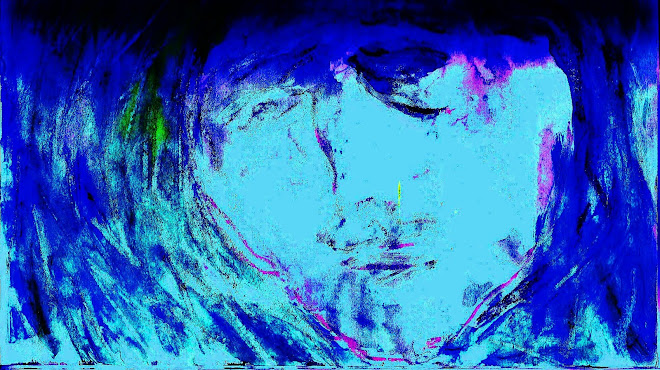
Human reality is generally confined by our perceptions, which are generally confined by our senses. Some people are able to hang out in the fringe and do things like see auras or move objects with their minds or materialize matter out of thin air. Many have been documented. Their access to reality fields extends a bit further than ours.
Some of the saints and mystics delved into alternate reality fields, as do some of those who experience stigmata or other miraculous phenomena for which no plausible explanation exists inside conventional reality.
Most of us exist in a box where we experience our lives through our senses and then make sense of our world through the information we take in and mold into our perceptions. Human life, in this way, is so limiting.
If we imagine a human frequency, beyond our senses and perceptions, a higher frequency than that of normal matter/energy, a vibratory energy (according to the Hindus), we can start to understand how some have seemingly supernatural abilities. We can also begin to fathom different reality fields stretching out into forever.
Our human construct, the thing we think we know, is solidified by our thinking we know and understand human reality. We take comfort in our box and most of us would probably prefer not to see auras or be able to move objects with our minds because what would that mean about the true nature of our reality? Is our box a complete illusion, only a construct to which we adhere for comfort's sake?
At times we all intuitively yearn for life outside the box, for alternate modalities in order to expand our existence. We sometimes experience frustration, knowing in our minds and hearts that so much more is possible, yet we remain trapped by the limitations of our human perceptions.
Certainly experiences where the normal human reality field meets the human energy field are worthwhile in that they prove that the simultaneous coexistence of the two realms of being are possible. Throughout history some people have stepped outside the box and shimmered for awhile in an alternate reality.
But no one can really define what a human energy field is. Like an electron, it exists beyond the limitations of our human definitions. We can only define it loosely, based on our observations of how it behaves. We cannot solidify it as a construct and then explain what it is made of or name its essence.
One has to wonder what modalities Christ was able to access or if He used free will to transfer His image onto the cloth of the Shroud, or to “cause” His image to appear. When any of us uses our free will to cause something to happen, we take ownership of that cause, meaning nothing else is doing the causing. It is as though our free will is connected to, or is the manifestation of, our human energy field.
Some interface between thought and matter must have allowed Christ to cause His suffering to transform into light and leave behind His serene image. He somehow released the matter of his physical body into light. And that light somehow managed to leave behind residual matter (His image).
Matter -- into light -- back into matter
Because no one has ever been able to explain or duplicate His image on the Shroud...
Because the image challenges science and religion to merge their efforts and share their insights to solve the mystery...
Because my birth resulted from having been cloned from the blood on the Shroud...
All these reasons have lead me to use my free will to cause and continue to deeply question how Christ was able to leave behind His image and why He would have chosen to do so...
~~~~~~~~~~~~~~~~~~~~~~~~~~~~~~~~~~~~~~~~~~
Is the image on the Shroud a picture of one possibility of how the human energy field behaves?
Does a human energy field exist everywhere at the same time...is it non-local?
Does human perception transform this frequency into solidity for the sake of controlling and comprehending our existence?
Was Christ's body at death a solid construct or a holographic image...or both?
By solidifying His image on the cloth, did Christ provide us with a glimpse into nonlocality, one that we can experience via our limited human perceptions for the sake of teaching us that we are both a solid body and a human energy frequency, capable of so much more that we realize?
If God is the consciousness that produces the appearance and awareness of the brain, matter, space, and time...then is the image on the Shroud the only human energy field perceivable to humans?
Does consciousness, via the human mind, create all realities or are all realities a manifestation of God, a consciousness that encompasses all and the human mind is just one of its realities?
If Christ's physical body was one reality field, that of solidity, then is the image on the Shroud evidence that matter (solidity) can co-exist simultaneously with the reality field of an energy frequency?
If we were to simply open ourselves and let God in on an energetic level, would we shift into deeper, more fascinating and reliable reality fields?
Is our free will to choose to live God's will for our lives equal to the choice to transform the matter of our bodies into light?
Is our free will our mechanism for the continuation of the life of our human souls?
~~~~~~~~~~~~~~~~~~~~~~~~~~~~~~~~~~~~~~~~~~
It almost seems moot to look for answers/proof inside unexplainable phenomena...its existence already is an answer, already is the proof that we exist far beyond our perceived limitations, regardless if our senses are able to conjure perceptions that confirm this or not.
regarding matter
say it so
so be it
Friday, July 16, 2010
Wednesday, June 30, 2010
Chapter 26: A Piece of Peace
“I leave you peace. My peace I give you.”
The most remarkable contrast evident upon the image on the Shroud of Turin is the overwhelming sense of peace amidst ample forensic proof of so many tortuous wounds and bloodstains. Clearly the man of the Shroud suffered immense physical pain, yet the residue of His image projects complete serenity.
Why would the image of serenity immersed in suffering have been the only artifact left behind? Was it Christ's intention to show us another possibility for our relationship to suffering?
Given the right set of circumstances, it would be safe to say that “the whole world is against us.” Among the billions of people on the planet, there are very few people, mostly our family and friends, who care deeply for us. Are we so naïve that we actually believe the world population really cares about our tiny individual lives before their own? If the whole world were to fall into a state of crisis, we would likely all be capable of turning on each other to fight for our own and our family's survival. Our lives hang in such a precarious balance and we are always on the edge of this primitive “survival of the fittest” mode, even though we perpetuate an illusion to the contrary.
The recent oil spill in the Gulf of Mexico is only one tiny fragment of proof that having zero back up plan is the norm for many human endeavors. We coexist in the illusion that our governments, companies, and institutions have their acts together and can handle all manner of large scale crises. We fabricate this false comfort zone because the reality of the tenuous nature of human existence is too overwhelmingly scary to contemplate. Good thing we have a sense of humor...
As one crisis after another emerges in our world, we are starting to see that our relief efforts only go so far. Haiti is still a disaster and most who were there to help have moved on. It's understandable – people can only do so much to help others; our own lives inevitably beckon us back home to help ourselves and those we love.
The time between disasters and crises seems to be shortening. It begs the question:
Why hasn't the the whole world already fallen into crisis all at once?
And that question leads me to other questions...
~~~~~~~~~~~~~~~~~~~~~~~~~~~~~~~~~~~~~~~~~
What is this force that binds together all our fragile realities and doles out the suffering incrementally so that we can recover and sustain our existence as a species?
Is it the same force that binds the scars and stains of torture embedded into the image on the Shroud?
Is human suffering holographic in nature, existing on many planes, in various domains, all suspended in some illusion of reality?
Is our suffering like a holographic image in that it is nonlocal – it cannot remain in a fixed location in space and time?
Do the particles of our suffering convert to waves when we are not directly experiencing the pain?
Is suffering part of the indivisible subatomic system, part of the implicate order that enfolds all realities into one?
Is each mark of suffering embedded into the image on the Shroud part of the 3D road map that answers the age old questions about why we are here and why we suffer?
Does the subatomic spray-like image that so faintly graces only the surface fibers of the cloth do so as a metaphor to remind us that the scars of suffering are temporary, but that salvation is eternal?
If you were Jesus Christ, a person with supernatural powers who could heal the sick and raise the dead, who could die and be resurrected... what would you leave behind for the world to contemplate?
~~~~~~~~~~~~~~~~~~~~~~~~~~~~~~~~~~~~~
It makes sense that Christ would have left us the gift of peace because we have no sustainable way to find true peace in our exterior tumultuous world. Amidst constant suffering and always on the brink of destruction, we tread the waters of this life and hold ourselves together as best we can. Peace in this world is a fairy tale we tell ourselves –- a way to hold onto hope.
Peace is not to be attained in our world. Serenity inside suffering is something we can only find deep within ourselves. It is a gift that we can only fully receive through faith, faith in the force that binds and protects us.
I marvel at how hard the skeptics work to prove the Shroud is a forgery and not the burial cloth of Jesus Christ. I wonder if each of them was left the gift of a million dollars and was told it was a gift from Christ if they would work equally hard to prove that gift a fake.
The mere presence of the image of serenity on this piece of cloth imbues us with the gift of peace. This Son of Man, who so willingly agrees to always be with us no matter the crisis, to never abandon us like most of the world would, to grace us with the detailed record of His suffering for our salvation...His is the image that remains largely ignored, ironically even among those who have faith.
His gift of peace serene
on cloth suspended
our dream
The most remarkable contrast evident upon the image on the Shroud of Turin is the overwhelming sense of peace amidst ample forensic proof of so many tortuous wounds and bloodstains. Clearly the man of the Shroud suffered immense physical pain, yet the residue of His image projects complete serenity.
Why would the image of serenity immersed in suffering have been the only artifact left behind? Was it Christ's intention to show us another possibility for our relationship to suffering?
Given the right set of circumstances, it would be safe to say that “the whole world is against us.” Among the billions of people on the planet, there are very few people, mostly our family and friends, who care deeply for us. Are we so naïve that we actually believe the world population really cares about our tiny individual lives before their own? If the whole world were to fall into a state of crisis, we would likely all be capable of turning on each other to fight for our own and our family's survival. Our lives hang in such a precarious balance and we are always on the edge of this primitive “survival of the fittest” mode, even though we perpetuate an illusion to the contrary.
The recent oil spill in the Gulf of Mexico is only one tiny fragment of proof that having zero back up plan is the norm for many human endeavors. We coexist in the illusion that our governments, companies, and institutions have their acts together and can handle all manner of large scale crises. We fabricate this false comfort zone because the reality of the tenuous nature of human existence is too overwhelmingly scary to contemplate. Good thing we have a sense of humor...
As one crisis after another emerges in our world, we are starting to see that our relief efforts only go so far. Haiti is still a disaster and most who were there to help have moved on. It's understandable – people can only do so much to help others; our own lives inevitably beckon us back home to help ourselves and those we love.
The time between disasters and crises seems to be shortening. It begs the question:
Why hasn't the the whole world already fallen into crisis all at once?
And that question leads me to other questions...
~~~~~~~~~~~~~~~~~~~~~~~~~~~~~~~~~~~~~~~~~
What is this force that binds together all our fragile realities and doles out the suffering incrementally so that we can recover and sustain our existence as a species?
Is it the same force that binds the scars and stains of torture embedded into the image on the Shroud?
Is human suffering holographic in nature, existing on many planes, in various domains, all suspended in some illusion of reality?
Is our suffering like a holographic image in that it is nonlocal – it cannot remain in a fixed location in space and time?
Do the particles of our suffering convert to waves when we are not directly experiencing the pain?
Is suffering part of the indivisible subatomic system, part of the implicate order that enfolds all realities into one?
Is each mark of suffering embedded into the image on the Shroud part of the 3D road map that answers the age old questions about why we are here and why we suffer?
Does the subatomic spray-like image that so faintly graces only the surface fibers of the cloth do so as a metaphor to remind us that the scars of suffering are temporary, but that salvation is eternal?
If you were Jesus Christ, a person with supernatural powers who could heal the sick and raise the dead, who could die and be resurrected... what would you leave behind for the world to contemplate?
~~~~~~~~~~~~~~~~~~~~~~~~~~~~~~~~~~~~~
It makes sense that Christ would have left us the gift of peace because we have no sustainable way to find true peace in our exterior tumultuous world. Amidst constant suffering and always on the brink of destruction, we tread the waters of this life and hold ourselves together as best we can. Peace in this world is a fairy tale we tell ourselves –- a way to hold onto hope.
Peace is not to be attained in our world. Serenity inside suffering is something we can only find deep within ourselves. It is a gift that we can only fully receive through faith, faith in the force that binds and protects us.
I marvel at how hard the skeptics work to prove the Shroud is a forgery and not the burial cloth of Jesus Christ. I wonder if each of them was left the gift of a million dollars and was told it was a gift from Christ if they would work equally hard to prove that gift a fake.
The mere presence of the image of serenity on this piece of cloth imbues us with the gift of peace. This Son of Man, who so willingly agrees to always be with us no matter the crisis, to never abandon us like most of the world would, to grace us with the detailed record of His suffering for our salvation...His is the image that remains largely ignored, ironically even among those who have faith.
His gift of peace serene
on cloth suspended
our dream

Thursday, June 17, 2010
Chapter 25: 2D/3D
Of the many things that make the image on the Shroud unique, the one that most captures my attention is the fact that 3 dimensional distance information is hidden in the image density itself and is encoded into the 2 dimensional image. Remember, the image only rests upon the surface fibers of the cloth and still it contains this hidden 3D information. No other 2 dimensional image – anywhere – ever – has this kind of information encoded into it. And no one has ever been able to reproduce this effect using modern science.
When considering Christ's death and resurrection...specifically the time in between the two, it makes one wonder about His consciousness. In other words did He die, slip into a state on non-being, no consciousness and then reanimate? Or was His physical body “dead” by all human definitions but His consciousness alive and well and intentionally deciding to leave us the imprint?
When you think about all the stuff you own and what would be left behind after you die, it's interesting to ponder that all our belongings, our physical objects and possessions, reflect who we are on this earth while living and who we were after we are dead and gone. Especially anything we created ourselves – these are the things that tell our story.
But we cannot directly go through Jesus' scrapbooks, photos albums, treasured childhood toys, writings, records...all we have to go on is Scripture and that comes from a variety of sources.
So if the Shroud is the only “thing” we have (and the Sudarium), how is it possible that all of Christianity is not completely fluent on the subject of the Shroud? It baffles the mind. Is it not enough that the Shroud is the one major “thing” Christ left behind, that it is embedded with an imprint of His suffering and resurrection, and that this 2D/3D phenomenon cannot be explained or reproduced...is it not enough for our faith to fathom...to marvel...to believe?
When considering Christ's death and resurrection...specifically the time in between the two, it makes one wonder about His consciousness. In other words did He die, slip into a state on non-being, no consciousness and then reanimate? Or was His physical body “dead” by all human definitions but His consciousness alive and well and intentionally deciding to leave us the imprint?
When you think about all the stuff you own and what would be left behind after you die, it's interesting to ponder that all our belongings, our physical objects and possessions, reflect who we are on this earth while living and who we were after we are dead and gone. Especially anything we created ourselves – these are the things that tell our story.
But we cannot directly go through Jesus' scrapbooks, photos albums, treasured childhood toys, writings, records...all we have to go on is Scripture and that comes from a variety of sources.
So if the Shroud is the only “thing” we have (and the Sudarium), how is it possible that all of Christianity is not completely fluent on the subject of the Shroud? It baffles the mind. Is it not enough that the Shroud is the one major “thing” Christ left behind, that it is embedded with an imprint of His suffering and resurrection, and that this 2D/3D phenomenon cannot be explained or reproduced...is it not enough for our faith to fathom...to marvel...to believe?
Saturday, June 5, 2010
Chapter 24: Connecting the Dots
I believe the number is 2 million, people that is, from all over the world who made their way to Turin to see the imprint of the resurrected Christ on the Shroud. Imagine if He were alive and preaching how many millions would come to hear Him speak. No stadium would be large enough.
Because the Shroud contains holographic information, I'm keen on learning more about the broader concepts associated with holograms. As always, I am coming up with more questions than answers...
~~~~~~~~~~~~~~~~~~~~~~~~~~~~~~~
Does the image on the Shroud only exist because we are observing it?
All the tiny dots, the subatomic particle spray — do these dots, when measured, show us the framework of the holographic grid?
Does the Shroud cloth act as a piece of holographic film, recording interference patterns and thus remembering all the information about the entire original image?
If the part of the Shroud that contains the image were to be cut into squares, could each piece be used to reconstruct the entire image?
Could the density of neurons in the brain be responsible for a kaleidoscope of interference patterns that result from vast amounts of electrical impulses in the brain cell connectivity? In this way could Jesus have “thought” his image onto the cloth during the Resurrection?
Holograms are virtual images that create the illusion that things are located where they are not. Does nonlocality apply to the image on the Shroud?
Can we produce of Fourier Transform of the image on the Shroud?
Is the image a frequency domain that can only be transformed into our perception of reality via employing our senses? If so, does this mean that Christ left us a legible “admissions ticket” into the frequency of the Divine?
When we die, are we simply enfolded back into the one thing reality...the whole?
Is there a hidden order enfolded into the interference patterns in the image on the cloth of the Shroud?
If the totality of an image on holographic film is hidden because it is enfolded into the interference patterns, then the actual hologram projected from the film is only the perceptible version of the image...in that same way is the image on the Shroud merely the perceptible reality and, thereby, is something far more profound enfolded into the cloth that we cannot perceive?
~~~~~~~~~~~~~~~~~~~~~~~~~~~~~~~~~~~~
If we can communicate using every cell, atom, molecule in our being and all realities are unbroken, then it stands to reason that each of us is everyone else. In this way, Christ dying on the cross for all the sins of humanity makes practical sense. He would have been a fully realized human being, one with self-actualized potential. A shape shifter who could take on the pain and suffering of every single human being throughout all of space and time by essentially “becoming” the reality of everyone else.
When we do something that helps another we feel an enormous satisfaction. In that respect, perhaps Christ was comforted by a satisfaction so profound that every ounce of His (our) suffering paled in comparison. The miracle of the Shroud is that the image conveys so much more than suffering...
slats of spheres
cylindrical specters that vector
subatomic chameleon
cloud like layers
transparency indicators
of helix horizontals
webbed verticals
and implicate dimensionless electrons
quanta
order
the chaos illusion
now you see it
now you don't
connecting the dots
framing the grid
while photons chatter and agree
their polarization angles
identical
instantaneous spatial orientation
crisscrossing ripples
into a deeper order
of subtle matter
where all particles agree
to nonlocality
interconnectedness
and the unbroken
flowing
Because the Shroud contains holographic information, I'm keen on learning more about the broader concepts associated with holograms. As always, I am coming up with more questions than answers...
~~~~~~~~~~~~~~~~~~~~~~~~~~~~~~~
Does the image on the Shroud only exist because we are observing it?
All the tiny dots, the subatomic particle spray — do these dots, when measured, show us the framework of the holographic grid?
Does the Shroud cloth act as a piece of holographic film, recording interference patterns and thus remembering all the information about the entire original image?
If the part of the Shroud that contains the image were to be cut into squares, could each piece be used to reconstruct the entire image?
Could the density of neurons in the brain be responsible for a kaleidoscope of interference patterns that result from vast amounts of electrical impulses in the brain cell connectivity? In this way could Jesus have “thought” his image onto the cloth during the Resurrection?
Holograms are virtual images that create the illusion that things are located where they are not. Does nonlocality apply to the image on the Shroud?
Can we produce of Fourier Transform of the image on the Shroud?
Is the image a frequency domain that can only be transformed into our perception of reality via employing our senses? If so, does this mean that Christ left us a legible “admissions ticket” into the frequency of the Divine?
When we die, are we simply enfolded back into the one thing reality...the whole?
Is there a hidden order enfolded into the interference patterns in the image on the cloth of the Shroud?
If the totality of an image on holographic film is hidden because it is enfolded into the interference patterns, then the actual hologram projected from the film is only the perceptible version of the image...in that same way is the image on the Shroud merely the perceptible reality and, thereby, is something far more profound enfolded into the cloth that we cannot perceive?
~~~~~~~~~~~~~~~~~~~~~~~~~~~~~~~~~~~~
If we can communicate using every cell, atom, molecule in our being and all realities are unbroken, then it stands to reason that each of us is everyone else. In this way, Christ dying on the cross for all the sins of humanity makes practical sense. He would have been a fully realized human being, one with self-actualized potential. A shape shifter who could take on the pain and suffering of every single human being throughout all of space and time by essentially “becoming” the reality of everyone else.
When we do something that helps another we feel an enormous satisfaction. In that respect, perhaps Christ was comforted by a satisfaction so profound that every ounce of His (our) suffering paled in comparison. The miracle of the Shroud is that the image conveys so much more than suffering...
slats of spheres
cylindrical specters that vector
subatomic chameleon
cloud like layers
transparency indicators
of helix horizontals
webbed verticals
and implicate dimensionless electrons
quanta
order
the chaos illusion
now you see it
now you don't
connecting the dots
framing the grid
while photons chatter and agree
their polarization angles
identical
instantaneous spatial orientation
crisscrossing ripples
into a deeper order
of subtle matter
where all particles agree
to nonlocality
interconnectedness
and the unbroken
flowing
Sunday, May 9, 2010
Chapter 23: Subtlety and Density
The Shroud is a singular enigma. How is it that an image that barely rests on the surface of the top fibers on the cloth — an image that does not even seep all the way into the actual threads — can contain such density of information and impact?
a paranormal panorama
dimensions undefined
particle subtlety ascension
density unwinds
a paranormal panorama
dimensions undefined
particle subtlety ascension
density unwinds
Tuesday, May 4, 2010
Chapter 22: Expectations and Reactions
I went to Turin with expectations about what I would feel and experience in the presence of the Shroud. I expected strong emotional reactions from myself — things like awe, sadness, maybe even guilt at the suffering Christ endured.
What I experienced in myself was so above and beyond my expectations. Rather than strong visceral emotional reactions, I experienced a level of reverence that transcended and exceeded my normal thoughts and emotions.
I was privileged to spend a total of 20 hours in the presence of the Shroud. I had 5 close up visits (that lasted just minutes each) and then the rest of my time I spent sitting in the Chapel, viewing it from a distance. I took copious notes while sitting in the Chapel. I studied the image mostly using the naked eye, but also with binoculars and 3D glasses.
I saw the Shroud when the Chapel was dark and also during Mass when the Chapel lights were on (both in the early morning and at night). I saw it while sitting, kneeling, and standing. I observed it with my head in both vertical and horizontal relationship to the image (which hangs horizontally). I viewed it from a staggered distances. I was in its presence at all hours, from very early in the morning, at various times during the day, evening, and late at night.
Normally when people see something incredible they use the phrase “It is beyond words” to describe it. The Shroud is the opposite; it deserves and demands an infinity of words. The experience is vast and indelible. Those 20 hours alone have given me years worth of chapters of blogging material. This lasting depth of subtlety and nuance in my observations arrived unexpected, and for it I am infinitely grateful.
I also did not expect to notice how starkly simplistic and simultaneously other worldly the Shroud is, especially when it stands in comparison to all the “bling” associated with other religious icons, paintings, relics, sculptures, vestments, ritual paraphernalia, churches, cathedrals, and so forth.
I literally have never seen anything like it — no other image or painting, or photograph or stain or scorch mark or anything comes even close to being comparable. That in and of itself is reason to marvel.
Sure, the Shroud of Turin is reminiscent of things I have seen before, such as ancient cave paintings, complex geometric designs that trick the eye, alien sci fi imagery, MRI's or X-rays, and Rorschach tests...but none of these come close to the density and depth of information or the subtlety and reach of the Shroud.
I also had expectations in terms of what I would see in other visitors' reactions. I thought I might see people crawling towards it on their knees like pilgrims do at Lourdes. I expected to see emotional breakdowns, sobbing, fainting and possible hysteria or religious fervor.
A common silence and atmosphere of serenity and reverence lingered in the Chapel. In addition, the level of focus and fixation on the image was so severe that one man tripped and fell into the Chapel pews, knocking one over. Another man was so fixated while walking in the back of the Chapel that he tripped and fell to the ground, hitting his head on the marble column.
There were some tears and many gasps of disbelief from the wound marks, but it was all very quiet and contained...all very in keeping with the serenity of the face of the man of the Shroud.
But mostly what I saw from others was the simple act of making the sign of the cross.
What I experienced in myself was so above and beyond my expectations. Rather than strong visceral emotional reactions, I experienced a level of reverence that transcended and exceeded my normal thoughts and emotions.
I was privileged to spend a total of 20 hours in the presence of the Shroud. I had 5 close up visits (that lasted just minutes each) and then the rest of my time I spent sitting in the Chapel, viewing it from a distance. I took copious notes while sitting in the Chapel. I studied the image mostly using the naked eye, but also with binoculars and 3D glasses.
I saw the Shroud when the Chapel was dark and also during Mass when the Chapel lights were on (both in the early morning and at night). I saw it while sitting, kneeling, and standing. I observed it with my head in both vertical and horizontal relationship to the image (which hangs horizontally). I viewed it from a staggered distances. I was in its presence at all hours, from very early in the morning, at various times during the day, evening, and late at night.
Normally when people see something incredible they use the phrase “It is beyond words” to describe it. The Shroud is the opposite; it deserves and demands an infinity of words. The experience is vast and indelible. Those 20 hours alone have given me years worth of chapters of blogging material. This lasting depth of subtlety and nuance in my observations arrived unexpected, and for it I am infinitely grateful.
I also did not expect to notice how starkly simplistic and simultaneously other worldly the Shroud is, especially when it stands in comparison to all the “bling” associated with other religious icons, paintings, relics, sculptures, vestments, ritual paraphernalia, churches, cathedrals, and so forth.
I literally have never seen anything like it — no other image or painting, or photograph or stain or scorch mark or anything comes even close to being comparable. That in and of itself is reason to marvel.
Sure, the Shroud of Turin is reminiscent of things I have seen before, such as ancient cave paintings, complex geometric designs that trick the eye, alien sci fi imagery, MRI's or X-rays, and Rorschach tests...but none of these come close to the density and depth of information or the subtlety and reach of the Shroud.
I also had expectations in terms of what I would see in other visitors' reactions. I thought I might see people crawling towards it on their knees like pilgrims do at Lourdes. I expected to see emotional breakdowns, sobbing, fainting and possible hysteria or religious fervor.
A common silence and atmosphere of serenity and reverence lingered in the Chapel. In addition, the level of focus and fixation on the image was so severe that one man tripped and fell into the Chapel pews, knocking one over. Another man was so fixated while walking in the back of the Chapel that he tripped and fell to the ground, hitting his head on the marble column.
There were some tears and many gasps of disbelief from the wound marks, but it was all very quiet and contained...all very in keeping with the serenity of the face of the man of the Shroud.
But mostly what I saw from others was the simple act of making the sign of the cross.
Sunday, May 2, 2010
Chapter 21: Skeptics and Believers
Skeptics believe that the Shroud is a fake
Believers are skeptical about thin science
What motivates skeptics and believers alike are their strong convictions about their positions. But what agendas drive these convictions...
Let's start with the skeptics:
If the vast majority of the science experimentation and research performed on the Shroud points to it being the real burial cloth of Jesus Christ, why is it that people continue to glom onto the 1988 carbon dating results, which is thin science at best (given that substantial evidence exists to refute the findings)?
Why would it be so important to skeptics to prove the Shroud is a fake--what would they gain?
Why would proof of the existence of Jesus Christ and His resurrection be so threatening?
Are they trying to protect their own religious beliefs, which may differ from Christianity?
Or do they worry that science will be somehow tarnished should the authenticity of the relic be proven? Would not scientific methods be elevated if they were used to reveal such an important discovery?
Since skeptics have no control, would proof of their convictions make them believe they are in control of existence as they know it?
And what of believers:
If the Shroud were proven to be a fake, why would that change anything in terms of one's faith in Christ's death and resurrection?
Does faith requires tangible proof?
Do believers need visible evidence for emotional, self-esteem based reasons?
If the Shroud were proven to be real, does that prove Christians' beliefs are right and somehow they are vindicated?
Since believers have no control, would proof of their convictions make them believe they are in control of existence as they know it?
Skeptics and believers have more in common than they might realize. They also share frustrations related to their positions.
Skeptics must be spinning their heads wondering why 2 million people are expected to visit and venerate the Shroud by the end of the exposition (and so far the numbers are proving to be accurate).
Believers heads spin when they ponder the notion that, if the Shroud is indeed the real deal, why would millions more not be banging down the doors of the Chapel to witness it (especially given how seldom it is exhibited to the public). As a Christian, what more important relic could there possibly be?
In the midst of human skepticism and belief, the Shroud of Turin, encased in bullet proof glass and hanging in the Chapel, is impervious to our attempts to prove. It is suspended in a different dimension, one that exists outside our frame of reference and belies any need for disproving or proving.
There is no need to “try” to see the Sindone...just see.
The Shroud teaches us to perceive from a less linear and logical perspective. In fact, it opens the mind to an entirely different way of “seeing”...and the less we try, the more we see.
Just as the image
rests
on the very tops of the fibers
without trying to lock itself
into the weave of the cloth
so too can we
rest
our eyes
our minds
our skepticism
our beliefs
and take in this image
we cannot explain
but can allow
to rest in us
Believers are skeptical about thin science
What motivates skeptics and believers alike are their strong convictions about their positions. But what agendas drive these convictions...
Let's start with the skeptics:
If the vast majority of the science experimentation and research performed on the Shroud points to it being the real burial cloth of Jesus Christ, why is it that people continue to glom onto the 1988 carbon dating results, which is thin science at best (given that substantial evidence exists to refute the findings)?
Why would it be so important to skeptics to prove the Shroud is a fake--what would they gain?
Why would proof of the existence of Jesus Christ and His resurrection be so threatening?
Are they trying to protect their own religious beliefs, which may differ from Christianity?
Or do they worry that science will be somehow tarnished should the authenticity of the relic be proven? Would not scientific methods be elevated if they were used to reveal such an important discovery?
Since skeptics have no control, would proof of their convictions make them believe they are in control of existence as they know it?
And what of believers:
If the Shroud were proven to be a fake, why would that change anything in terms of one's faith in Christ's death and resurrection?
Does faith requires tangible proof?
Do believers need visible evidence for emotional, self-esteem based reasons?
If the Shroud were proven to be real, does that prove Christians' beliefs are right and somehow they are vindicated?
Since believers have no control, would proof of their convictions make them believe they are in control of existence as they know it?
Skeptics and believers have more in common than they might realize. They also share frustrations related to their positions.
Skeptics must be spinning their heads wondering why 2 million people are expected to visit and venerate the Shroud by the end of the exposition (and so far the numbers are proving to be accurate).
Believers heads spin when they ponder the notion that, if the Shroud is indeed the real deal, why would millions more not be banging down the doors of the Chapel to witness it (especially given how seldom it is exhibited to the public). As a Christian, what more important relic could there possibly be?
In the midst of human skepticism and belief, the Shroud of Turin, encased in bullet proof glass and hanging in the Chapel, is impervious to our attempts to prove. It is suspended in a different dimension, one that exists outside our frame of reference and belies any need for disproving or proving.
There is no need to “try” to see the Sindone...just see.
The Shroud teaches us to perceive from a less linear and logical perspective. In fact, it opens the mind to an entirely different way of “seeing”...and the less we try, the more we see.
Just as the image
rests
on the very tops of the fibers
without trying to lock itself
into the weave of the cloth
so too can we
rest
our eyes
our minds
our skepticism
our beliefs
and take in this image
we cannot explain
but can allow
to rest in us
Subscribe to:
Posts (Atom)