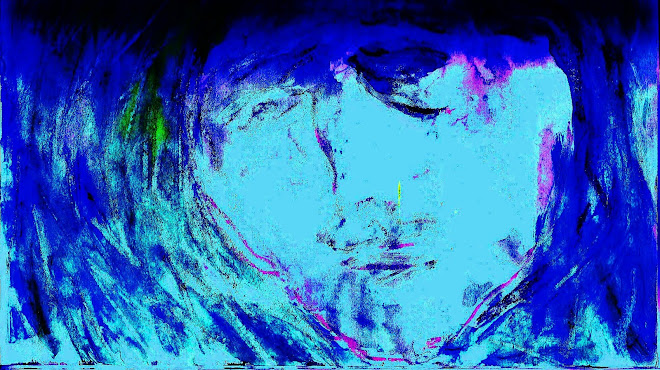
The Shroud is a singular enigma. How is it that an image that barely rests on the surface of the top fibers on the cloth — an image that does not even seep all the way into the actual threads — can contain such density of information and impact?
a paranormal panorama
dimensions undefined
particle subtlety ascension
density unwinds
Sunday, May 9, 2010
Tuesday, May 4, 2010
Chapter 22: Expectations and Reactions
I went to Turin with expectations about what I would feel and experience in the presence of the Shroud. I expected strong emotional reactions from myself — things like awe, sadness, maybe even guilt at the suffering Christ endured.
What I experienced in myself was so above and beyond my expectations. Rather than strong visceral emotional reactions, I experienced a level of reverence that transcended and exceeded my normal thoughts and emotions.
I was privileged to spend a total of 20 hours in the presence of the Shroud. I had 5 close up visits (that lasted just minutes each) and then the rest of my time I spent sitting in the Chapel, viewing it from a distance. I took copious notes while sitting in the Chapel. I studied the image mostly using the naked eye, but also with binoculars and 3D glasses.
I saw the Shroud when the Chapel was dark and also during Mass when the Chapel lights were on (both in the early morning and at night). I saw it while sitting, kneeling, and standing. I observed it with my head in both vertical and horizontal relationship to the image (which hangs horizontally). I viewed it from a staggered distances. I was in its presence at all hours, from very early in the morning, at various times during the day, evening, and late at night.
Normally when people see something incredible they use the phrase “It is beyond words” to describe it. The Shroud is the opposite; it deserves and demands an infinity of words. The experience is vast and indelible. Those 20 hours alone have given me years worth of chapters of blogging material. This lasting depth of subtlety and nuance in my observations arrived unexpected, and for it I am infinitely grateful.
I also did not expect to notice how starkly simplistic and simultaneously other worldly the Shroud is, especially when it stands in comparison to all the “bling” associated with other religious icons, paintings, relics, sculptures, vestments, ritual paraphernalia, churches, cathedrals, and so forth.
I literally have never seen anything like it — no other image or painting, or photograph or stain or scorch mark or anything comes even close to being comparable. That in and of itself is reason to marvel.
Sure, the Shroud of Turin is reminiscent of things I have seen before, such as ancient cave paintings, complex geometric designs that trick the eye, alien sci fi imagery, MRI's or X-rays, and Rorschach tests...but none of these come close to the density and depth of information or the subtlety and reach of the Shroud.
I also had expectations in terms of what I would see in other visitors' reactions. I thought I might see people crawling towards it on their knees like pilgrims do at Lourdes. I expected to see emotional breakdowns, sobbing, fainting and possible hysteria or religious fervor.
A common silence and atmosphere of serenity and reverence lingered in the Chapel. In addition, the level of focus and fixation on the image was so severe that one man tripped and fell into the Chapel pews, knocking one over. Another man was so fixated while walking in the back of the Chapel that he tripped and fell to the ground, hitting his head on the marble column.
There were some tears and many gasps of disbelief from the wound marks, but it was all very quiet and contained...all very in keeping with the serenity of the face of the man of the Shroud.
But mostly what I saw from others was the simple act of making the sign of the cross.
What I experienced in myself was so above and beyond my expectations. Rather than strong visceral emotional reactions, I experienced a level of reverence that transcended and exceeded my normal thoughts and emotions.
I was privileged to spend a total of 20 hours in the presence of the Shroud. I had 5 close up visits (that lasted just minutes each) and then the rest of my time I spent sitting in the Chapel, viewing it from a distance. I took copious notes while sitting in the Chapel. I studied the image mostly using the naked eye, but also with binoculars and 3D glasses.
I saw the Shroud when the Chapel was dark and also during Mass when the Chapel lights were on (both in the early morning and at night). I saw it while sitting, kneeling, and standing. I observed it with my head in both vertical and horizontal relationship to the image (which hangs horizontally). I viewed it from a staggered distances. I was in its presence at all hours, from very early in the morning, at various times during the day, evening, and late at night.
Normally when people see something incredible they use the phrase “It is beyond words” to describe it. The Shroud is the opposite; it deserves and demands an infinity of words. The experience is vast and indelible. Those 20 hours alone have given me years worth of chapters of blogging material. This lasting depth of subtlety and nuance in my observations arrived unexpected, and for it I am infinitely grateful.
I also did not expect to notice how starkly simplistic and simultaneously other worldly the Shroud is, especially when it stands in comparison to all the “bling” associated with other religious icons, paintings, relics, sculptures, vestments, ritual paraphernalia, churches, cathedrals, and so forth.
I literally have never seen anything like it — no other image or painting, or photograph or stain or scorch mark or anything comes even close to being comparable. That in and of itself is reason to marvel.
Sure, the Shroud of Turin is reminiscent of things I have seen before, such as ancient cave paintings, complex geometric designs that trick the eye, alien sci fi imagery, MRI's or X-rays, and Rorschach tests...but none of these come close to the density and depth of information or the subtlety and reach of the Shroud.
I also had expectations in terms of what I would see in other visitors' reactions. I thought I might see people crawling towards it on their knees like pilgrims do at Lourdes. I expected to see emotional breakdowns, sobbing, fainting and possible hysteria or religious fervor.
A common silence and atmosphere of serenity and reverence lingered in the Chapel. In addition, the level of focus and fixation on the image was so severe that one man tripped and fell into the Chapel pews, knocking one over. Another man was so fixated while walking in the back of the Chapel that he tripped and fell to the ground, hitting his head on the marble column.
There were some tears and many gasps of disbelief from the wound marks, but it was all very quiet and contained...all very in keeping with the serenity of the face of the man of the Shroud.
But mostly what I saw from others was the simple act of making the sign of the cross.

Sunday, May 2, 2010
Chapter 21: Skeptics and Believers
Skeptics believe that the Shroud is a fake
Believers are skeptical about thin science
What motivates skeptics and believers alike are their strong convictions about their positions. But what agendas drive these convictions...
Let's start with the skeptics:
If the vast majority of the science experimentation and research performed on the Shroud points to it being the real burial cloth of Jesus Christ, why is it that people continue to glom onto the 1988 carbon dating results, which is thin science at best (given that substantial evidence exists to refute the findings)?
Why would it be so important to skeptics to prove the Shroud is a fake--what would they gain?
Why would proof of the existence of Jesus Christ and His resurrection be so threatening?
Are they trying to protect their own religious beliefs, which may differ from Christianity?
Or do they worry that science will be somehow tarnished should the authenticity of the relic be proven? Would not scientific methods be elevated if they were used to reveal such an important discovery?
Since skeptics have no control, would proof of their convictions make them believe they are in control of existence as they know it?
And what of believers:
If the Shroud were proven to be a fake, why would that change anything in terms of one's faith in Christ's death and resurrection?
Does faith requires tangible proof?
Do believers need visible evidence for emotional, self-esteem based reasons?
If the Shroud were proven to be real, does that prove Christians' beliefs are right and somehow they are vindicated?
Since believers have no control, would proof of their convictions make them believe they are in control of existence as they know it?
Skeptics and believers have more in common than they might realize. They also share frustrations related to their positions.
Skeptics must be spinning their heads wondering why 2 million people are expected to visit and venerate the Shroud by the end of the exposition (and so far the numbers are proving to be accurate).
Believers heads spin when they ponder the notion that, if the Shroud is indeed the real deal, why would millions more not be banging down the doors of the Chapel to witness it (especially given how seldom it is exhibited to the public). As a Christian, what more important relic could there possibly be?
In the midst of human skepticism and belief, the Shroud of Turin, encased in bullet proof glass and hanging in the Chapel, is impervious to our attempts to prove. It is suspended in a different dimension, one that exists outside our frame of reference and belies any need for disproving or proving.
There is no need to “try” to see the Sindone...just see.
The Shroud teaches us to perceive from a less linear and logical perspective. In fact, it opens the mind to an entirely different way of “seeing”...and the less we try, the more we see.
Just as the image
rests
on the very tops of the fibers
without trying to lock itself
into the weave of the cloth
so too can we
rest
our eyes
our minds
our skepticism
our beliefs
and take in this image
we cannot explain
but can allow
to rest in us
Believers are skeptical about thin science
What motivates skeptics and believers alike are their strong convictions about their positions. But what agendas drive these convictions...
Let's start with the skeptics:
If the vast majority of the science experimentation and research performed on the Shroud points to it being the real burial cloth of Jesus Christ, why is it that people continue to glom onto the 1988 carbon dating results, which is thin science at best (given that substantial evidence exists to refute the findings)?
Why would it be so important to skeptics to prove the Shroud is a fake--what would they gain?
Why would proof of the existence of Jesus Christ and His resurrection be so threatening?
Are they trying to protect their own religious beliefs, which may differ from Christianity?
Or do they worry that science will be somehow tarnished should the authenticity of the relic be proven? Would not scientific methods be elevated if they were used to reveal such an important discovery?
Since skeptics have no control, would proof of their convictions make them believe they are in control of existence as they know it?
And what of believers:
If the Shroud were proven to be a fake, why would that change anything in terms of one's faith in Christ's death and resurrection?
Does faith requires tangible proof?
Do believers need visible evidence for emotional, self-esteem based reasons?
If the Shroud were proven to be real, does that prove Christians' beliefs are right and somehow they are vindicated?
Since believers have no control, would proof of their convictions make them believe they are in control of existence as they know it?
Skeptics and believers have more in common than they might realize. They also share frustrations related to their positions.
Skeptics must be spinning their heads wondering why 2 million people are expected to visit and venerate the Shroud by the end of the exposition (and so far the numbers are proving to be accurate).
Believers heads spin when they ponder the notion that, if the Shroud is indeed the real deal, why would millions more not be banging down the doors of the Chapel to witness it (especially given how seldom it is exhibited to the public). As a Christian, what more important relic could there possibly be?
In the midst of human skepticism and belief, the Shroud of Turin, encased in bullet proof glass and hanging in the Chapel, is impervious to our attempts to prove. It is suspended in a different dimension, one that exists outside our frame of reference and belies any need for disproving or proving.
There is no need to “try” to see the Sindone...just see.
The Shroud teaches us to perceive from a less linear and logical perspective. In fact, it opens the mind to an entirely different way of “seeing”...and the less we try, the more we see.
Just as the image
rests
on the very tops of the fibers
without trying to lock itself
into the weave of the cloth
so too can we
rest
our eyes
our minds
our skepticism
our beliefs
and take in this image
we cannot explain
but can allow
to rest in us
Wednesday, April 28, 2010
Chapter 20: Kaleidescope Meditations
For those of you who know my back story, you might remember that the first time I saw the Sindone was in a private viewing in Turin one night in 2008. Given the magnitude of the personal identity crisis I was experiencing at the time, this viewing of the Shroud was a private, life changing event for me.
The intention of this blog is not to dwell on my personal life, but I want to preface my upcoming writings on my observations and experiences to clarify that I am seeing the Shroud this time around in a public exhibition and this April 2010 visit will be the focus of these posts.
Here in Turin, among so many people who are flocking in all day long, the experience is vast. So far I have been able to clock 8 hours in the presence of the Sindone and I can tell you that I already have enough to write about for years to come.
When you enter the chapel and stand before the Shroud, it is as though you have just entered a vault where time, space, dimension, and perspective are all brought to a new beginning. But it does not come over you right away. Just as when you first lay eyes on the cloth, the image is faint and does not come into immediate focus. So too, you do not feel the magnitude of the impact of the experience immediately or all at once. But very soon your eyes acclimate to the dimly lit chapel and the cloth, which is suspended horizontally, so that the image is a panorama.
And then something strange and unique happens...the image appears. That is not simply a function of your eyes acclimating. It is a sudden and certain relationship. It is an act of receiving Jesus. It is a surrender to seeing with your mind, not your eyes. You are arriving. And you know, possibly for the first time, what is true.
In the posts to come I will take time to slowly and gradually turn the kaleidescope and let you see and experience the Shroud of Turin from my mind.
It is not too late for you to hop on a plane, train, whatever it takes and make your own way to the Sindone.
The intention of this blog is not to dwell on my personal life, but I want to preface my upcoming writings on my observations and experiences to clarify that I am seeing the Shroud this time around in a public exhibition and this April 2010 visit will be the focus of these posts.
Here in Turin, among so many people who are flocking in all day long, the experience is vast. So far I have been able to clock 8 hours in the presence of the Sindone and I can tell you that I already have enough to write about for years to come.
When you enter the chapel and stand before the Shroud, it is as though you have just entered a vault where time, space, dimension, and perspective are all brought to a new beginning. But it does not come over you right away. Just as when you first lay eyes on the cloth, the image is faint and does not come into immediate focus. So too, you do not feel the magnitude of the impact of the experience immediately or all at once. But very soon your eyes acclimate to the dimly lit chapel and the cloth, which is suspended horizontally, so that the image is a panorama.
And then something strange and unique happens...the image appears. That is not simply a function of your eyes acclimating. It is a sudden and certain relationship. It is an act of receiving Jesus. It is a surrender to seeing with your mind, not your eyes. You are arriving. And you know, possibly for the first time, what is true.
In the posts to come I will take time to slowly and gradually turn the kaleidescope and let you see and experience the Shroud of Turin from my mind.
It is not too late for you to hop on a plane, train, whatever it takes and make your own way to the Sindone.
Friday, April 23, 2010
Chapter 19: Torino

Exposition of the Holy Shroud
SURNAME ADLER
NAME JES
DAY
26/04/2010
TIME 09:00
BOOKING CODE
BJ35N673
NUMBER OF PERSONS 1
---------------------------------------------
I made it to Turin after all. I had to book a new flight but it is so worth it. I have been spending quite a bit of time with the Shroud and have been blessed to be in both close proximity and at a distance while sitting in the chapel.
I will assemble my notes and observations and see where I land. For now, one person I spoke with said it best: "When you are in the room with the Sindone you must look at it. You cannot do anything else."
Monday, April 19, 2010
Chapter 18: Carbon and Ash
Last week it was announced that another radiocarbon dating will be conducted on the Shroud of Turin. Also last week a volcano in Iceland spewed forth a cloud of volcanic ash, grinding travel across Europe to a halt. The skies darkened in an ominous cloud of toxic, gritty volcanic ash. A suitable metaphor for radiocarbon dating.
This upcoming radiocarbon dating the cloth of the Shroud would be something of a moot attempt at proving the authenticity of the Shroud image (but not for the reason skeptics latch onto: that the 1988 testing proved the cloth to be a medieval forgery).
Certainly a new C14 test result of the cloth should be able to tell us the age of the cloth itself — that is if this go round they responsibly test a sample of the cloth that had not been repaired. Regardless, no matter what the proven age of the cloth is, that will never prove beyond a shadow of a doubt that the age of the cloth is the same as the age of the image on the cloth...
No one has ever satisfactorily proven how the image got onto the cloth, much less when it got there. The Shroud first surfaces in documented history circa 1355. Who is to say Christ did not choose to imbue His image on a piece of cloth then? For that matter, who is to say that He could not, right this moment, transfer His image onto every waving flag of every nation or onto the bed sheets of every person around the world?
Stranded passengers at airports all over Europe and beyond are experiencing “an act of God”. Befuddled and bewildered, they are left helpless and without control. Likely, many are on their way to see the Shroud. I was, but my flights were canceled. Frustrating, disappointing, yes. But acts of God are totally out of our hands.
It is easy to take it personally when you are in some way affected by an act of God. A cloud of suspicion lingers and you wonder if you did something wrong or if God is smiting you. But that is the nature of how we tend to perceive suffering, as though we are being targeted individually. The human ego can do little else except ask “why me?”. We are first confined to the boundaries of our own personal suffering. Within those confines, we empathize with the suffering of others.
Christ was a man whose personal suffering was an example of “Yes, me!” not “Why me?”. He took on all suffering for each of us and then left behind an imprint of it for us to be reassured that the burden is not ours alone. But, of course, being human with our fragile egos, we work furiously and tirelessly to try to disprove the authenticity of His gift. We have the arrogance to think that, if the cloth is proven to be from another time period, then the image could not be that of Jesus Christ. Never mind that the image contains holographic information. Never mind that no one can adequately explain how the image got onto the cloth. Never mind that Jesus might just have been a man who could move and reassemble His particles outside the boundaries of what we know and understand as spacetime...
If the C14 testing is repeated, surely it makes sense for it to be done meticulously and with strict oversight. The French reweaving of the 1st century cloth with the 16th century cloth is reason enough to warrant a new testing of some kind, as it clearly throws a wrench in the 1988 C14 test results. But in the end, what are we really testing here...the boundaries of time, faith, skepticism?
Acts of God humble us and bring us directly back to the reality of how very small and insignificant we are. We are experiencing that smallness all over the world now with volcanoes, earthquakes, floods, hurricanes, and other natural disasters.
And still, in our smallness, we go on living, steadfastly attached to the assumption that the human race is of the utmost significance. That illusion is hard wired into us via our survival instinct. Anything in our domain (the Shroud, for example) becomes fodder for our scrutiny. We assert control...that is what we humans do best.
It is refreshing to have an image in our midst of a suffering crucified man who, via an imprint of complete vulnerability and surrender to death, becomes a puzzle we can never solve and an answer we can never fully control.
carbon locks
readable time
unlocking
reachable faith
ash locking
clear skies
unlocks
darkened days
alone in this desert
testing prayer
we prove
This upcoming radiocarbon dating the cloth of the Shroud would be something of a moot attempt at proving the authenticity of the Shroud image (but not for the reason skeptics latch onto: that the 1988 testing proved the cloth to be a medieval forgery).
Certainly a new C14 test result of the cloth should be able to tell us the age of the cloth itself — that is if this go round they responsibly test a sample of the cloth that had not been repaired. Regardless, no matter what the proven age of the cloth is, that will never prove beyond a shadow of a doubt that the age of the cloth is the same as the age of the image on the cloth...
No one has ever satisfactorily proven how the image got onto the cloth, much less when it got there. The Shroud first surfaces in documented history circa 1355. Who is to say Christ did not choose to imbue His image on a piece of cloth then? For that matter, who is to say that He could not, right this moment, transfer His image onto every waving flag of every nation or onto the bed sheets of every person around the world?
Stranded passengers at airports all over Europe and beyond are experiencing “an act of God”. Befuddled and bewildered, they are left helpless and without control. Likely, many are on their way to see the Shroud. I was, but my flights were canceled. Frustrating, disappointing, yes. But acts of God are totally out of our hands.
It is easy to take it personally when you are in some way affected by an act of God. A cloud of suspicion lingers and you wonder if you did something wrong or if God is smiting you. But that is the nature of how we tend to perceive suffering, as though we are being targeted individually. The human ego can do little else except ask “why me?”. We are first confined to the boundaries of our own personal suffering. Within those confines, we empathize with the suffering of others.
Christ was a man whose personal suffering was an example of “Yes, me!” not “Why me?”. He took on all suffering for each of us and then left behind an imprint of it for us to be reassured that the burden is not ours alone. But, of course, being human with our fragile egos, we work furiously and tirelessly to try to disprove the authenticity of His gift. We have the arrogance to think that, if the cloth is proven to be from another time period, then the image could not be that of Jesus Christ. Never mind that the image contains holographic information. Never mind that no one can adequately explain how the image got onto the cloth. Never mind that Jesus might just have been a man who could move and reassemble His particles outside the boundaries of what we know and understand as spacetime...
If the C14 testing is repeated, surely it makes sense for it to be done meticulously and with strict oversight. The French reweaving of the 1st century cloth with the 16th century cloth is reason enough to warrant a new testing of some kind, as it clearly throws a wrench in the 1988 C14 test results. But in the end, what are we really testing here...the boundaries of time, faith, skepticism?
Acts of God humble us and bring us directly back to the reality of how very small and insignificant we are. We are experiencing that smallness all over the world now with volcanoes, earthquakes, floods, hurricanes, and other natural disasters.
And still, in our smallness, we go on living, steadfastly attached to the assumption that the human race is of the utmost significance. That illusion is hard wired into us via our survival instinct. Anything in our domain (the Shroud, for example) becomes fodder for our scrutiny. We assert control...that is what we humans do best.
It is refreshing to have an image in our midst of a suffering crucified man who, via an imprint of complete vulnerability and surrender to death, becomes a puzzle we can never solve and an answer we can never fully control.
carbon locks
readable time
unlocking
reachable faith
ash locking
clear skies
unlocks
darkened days
alone in this desert
testing prayer
we prove
Friday, April 9, 2010
Chapter 17: Conscious Christ = Christ Consciousness
Human life should sparkle more but it is dulled by suffering. Of all the images Christ could have left behind for us, why the image of His crucified body? Even though His expression is peaceful and calm, all evidence of every torturous mark is imbued upon the Shroud.
I want to explore the idea that Christ, using His superior consciousness, was able to think His image onto the cloth.
It is so much easier to ask big questions than it is to live small lives...
~~~~~~~~~~~~~~~~~~~~~~~~~~~~~~~~~~~~~~~~~~~~~~~~
Was Jesus a man with supernatural thought capacities?
Is every single thought is like a tiny particle of matter?
Is it is possible to have massless thoughts?
If thoughts are made of an electromagnetic field, then is God's mind (Christ's thoughts)able to manifest through an energy pattern as matter?
If Christ placed his image on the Shroud via some type of wave collapse or particle manipulation, could He reformulate His particles into living matter and remove Himself from the cloth and step back out into the world again as a human man?
And what of our thoughts...are we the only living entities who can receive or reject Jesus and God?
Is “receiving Jesus” something we do simply by activating our beliefs and faith? Is pointing our thoughts towards Christ enough?
Or does receiving Jesus mean allowing Him inside us by allowing His electromagnetic fields, His particles and waves, His matter into our own?
If we are the only living creatures who can have thoughts about our life and death, via our consciousness, then are we also the only living creatures whose thoughts about God can manifest Christ Consciousness?
Are thoughts of love the highest, most pure and refined electromagnetic frequency in existence?
Is human suffering an expression of collapsed matter, of infinite density?
Could gravity be the force that expresses control, while joy expresses momentum? If so, then is our need to control a manifestation of gravity, mass, and density?
Is the human soul equivalent to masslessness?
Is death infinite light and masslessness?
Does suffering enable us to perceive the coexistence of death in the midst of life?
Christ's dead body on the cloth = matter
Christ's image left behind on the cloth = matter + masslessness
Living matter + nonliving matter + dark matter passing through everything it encounters
If no one has ever seen a dark matter particle and dark matter is an invisible mass and is gravitationally attractive, could Christ have used His superior consciousness to imbue dark matter particles onto the cloth?
If we consider the spaces between the fibers on the Shroud, does dark matter allow the image to maintain its structure? Otherwise, would the weave not collapse in on itself?
And if the image rests on top of the fibers, as though subatomic particles were sprayed onto the cloth, does the same consistent rotational speed of the dark matter bind these subatomic particles to the fibers?~~~~~~~~~~~~~~~~~~~~~~~~~~~~~~~~~~~~~~~~~~~~~~~
Millions of people, entities of living matter, are preparing to visit Turin to see the Shroud in April/May of 2010. Millions will witness the imprint of human suffering.
Human suffering is the one thing that scientists, skeptics, and believers in the Shroud all have in common.
The Conscious Christ activates Christ Consciousness. And life does indeed sparkle more, even in the midst of all our human suffering.
I want to explore the idea that Christ, using His superior consciousness, was able to think His image onto the cloth.
It is so much easier to ask big questions than it is to live small lives...
~~~~~~~~~~~~~~~~~~~~~~~~~~~~~~~~~~~~~~~~~~~~~~~~
Was Jesus a man with supernatural thought capacities?
Is every single thought is like a tiny particle of matter?
Is it is possible to have massless thoughts?
If thoughts are made of an electromagnetic field, then is God's mind (Christ's thoughts)able to manifest through an energy pattern as matter?
If Christ placed his image on the Shroud via some type of wave collapse or particle manipulation, could He reformulate His particles into living matter and remove Himself from the cloth and step back out into the world again as a human man?
And what of our thoughts...are we the only living entities who can receive or reject Jesus and God?
Is “receiving Jesus” something we do simply by activating our beliefs and faith? Is pointing our thoughts towards Christ enough?
Or does receiving Jesus mean allowing Him inside us by allowing His electromagnetic fields, His particles and waves, His matter into our own?
If we are the only living creatures who can have thoughts about our life and death, via our consciousness, then are we also the only living creatures whose thoughts about God can manifest Christ Consciousness?
Are thoughts of love the highest, most pure and refined electromagnetic frequency in existence?
Is human suffering an expression of collapsed matter, of infinite density?
Could gravity be the force that expresses control, while joy expresses momentum? If so, then is our need to control a manifestation of gravity, mass, and density?
Is the human soul equivalent to masslessness?
Is death infinite light and masslessness?
Does suffering enable us to perceive the coexistence of death in the midst of life?
Christ's dead body on the cloth = matter
Christ's image left behind on the cloth = matter + masslessness
Living matter + nonliving matter + dark matter passing through everything it encounters
If no one has ever seen a dark matter particle and dark matter is an invisible mass and is gravitationally attractive, could Christ have used His superior consciousness to imbue dark matter particles onto the cloth?
If we consider the spaces between the fibers on the Shroud, does dark matter allow the image to maintain its structure? Otherwise, would the weave not collapse in on itself?
And if the image rests on top of the fibers, as though subatomic particles were sprayed onto the cloth, does the same consistent rotational speed of the dark matter bind these subatomic particles to the fibers?~~~~~~~~~~~~~~~~~~~~~~~~~~~~~~~~~~~~~~~~~~~~~~~
Millions of people, entities of living matter, are preparing to visit Turin to see the Shroud in April/May of 2010. Millions will witness the imprint of human suffering.
Human suffering is the one thing that scientists, skeptics, and believers in the Shroud all have in common.
The Conscious Christ activates Christ Consciousness. And life does indeed sparkle more, even in the midst of all our human suffering.
Subscribe to:
Posts (Atom)