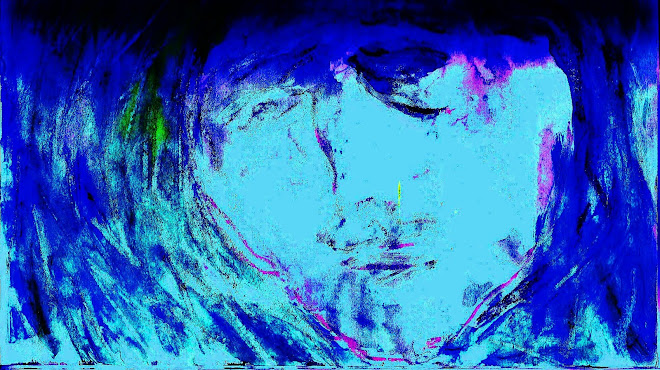
The multiplicity of dimensions in the infinity of experiences of life and death are beyond human capability for absorption. No comprehension is adequate for an explanation of the nature of life or death, even though we are comprised of both.
We cannot fathom to scale.
The shroud reminds us that the structure of energy is always changing. From suffering to death to life to light, we need not feel trapped by any form our energy takes.
Our protection is integral. His gift of salvation eternal.
Monday, May 30, 2011
Sunday, April 24, 2011
Chapter 46: Promises
In the tomb, two pieces of cloth, separated, both enunciating the absence of Christ's physical body and the presence of His resurrection.
Two promises of eternal life, the life that rectifies the cruelty of human suffering.
Are we each living God's will for our life... or is our living itself God's will for our life?
We announce our promise of faith. We celebrate the promise of the tomb that is not exactly empty.
Two promises of eternal life, the life that rectifies the cruelty of human suffering.
Are we each living God's will for our life... or is our living itself God's will for our life?
We announce our promise of faith. We celebrate the promise of the tomb that is not exactly empty.

Saturday, April 23, 2011
Chapter 45: Sabbatum Sanctum
The day of the entombed Christ is the quiet rest of the Lord as He lay in His tomb.
It is the most mysterious day where the shroud is concerned, because we do not fully comprehend the mix of processes that created the imprint of Christ. Nor do we understand if the image was graced to us on this day of rest or if it is a byproduct of the resurrection...or both.
We assume that the Lord lay at rest, but what biological and chemical interactions, what principles of physics and unknown mysteries might He have been absorbing and redistributing in the midst of that quiet?
The Lord's quiet acceptance of His suffering and death does appear to be the message we are to absorb when gazing upon the image on the shroud. His message redefines our expectations of death.
That silent mystery we so fear is also the peaceful quiet we yearn for in the deepest subconscious interactions of our own living and dying. Was Christ using His day of rest to create this yearning for death in us?
Perhaps the Lord's forty days of confronting temptations in the desert and this day of rest in the tomb forge the alchemy of our eternal rest, the promised salvation, the quintessential quiet.
It is the most mysterious day where the shroud is concerned, because we do not fully comprehend the mix of processes that created the imprint of Christ. Nor do we understand if the image was graced to us on this day of rest or if it is a byproduct of the resurrection...or both.
We assume that the Lord lay at rest, but what biological and chemical interactions, what principles of physics and unknown mysteries might He have been absorbing and redistributing in the midst of that quiet?
The Lord's quiet acceptance of His suffering and death does appear to be the message we are to absorb when gazing upon the image on the shroud. His message redefines our expectations of death.
That silent mystery we so fear is also the peaceful quiet we yearn for in the deepest subconscious interactions of our own living and dying. Was Christ using His day of rest to create this yearning for death in us?
Perhaps the Lord's forty days of confronting temptations in the desert and this day of rest in the tomb forge the alchemy of our eternal rest, the promised salvation, the quintessential quiet.
Friday, April 22, 2011
Chapter 44: Gethsemane Shadow
three falls
three crosses
Simon helps you
help thieves
help us
the shadow of your cross
reaches a cross
over all lands
in the garden of Gethsemane
doubt and fear
mingling
not lingering
you are comforted
accepting death
as your Father's will
accepting suffering
as your will for our salvation
we are comforted
Pilate's purpose
to wash his hands
only you and mother Mary
fully understand
Veronica
a veil
Joseph of Arimathea
a burial shroud
shrines for us to witness
taken back
our pain to God
vanquished
the fragile shroud
vanished
your suffering
taken back
three crosses
Simon helps you
help thieves
help us
the shadow of your cross
reaches a cross
over all lands
in the garden of Gethsemane
doubt and fear
mingling
not lingering
you are comforted
accepting death
as your Father's will
accepting suffering
as your will for our salvation
we are comforted
Pilate's purpose
to wash his hands
only you and mother Mary
fully understand
Veronica
a veil
Joseph of Arimathea
a burial shroud
shrines for us to witness
taken back
our pain to God
vanquished
the fragile shroud
vanished
your suffering
taken back
Sunday, April 17, 2011
Chapter 43: Reed in His Right Hand
The crown of thorns is the mockery most noticed in the story of Christ's Passion. But what of the reed they placed in His right hand?
An instrument of irony. That reed, meant first to mock Christ as King, is the precursor to a second reed that is used to support a sponge soaked in wine and offered to Jesus before His very last breath.
The blood of a King that a King will not himself drink, but will spring forth and shower over all those who thirst.
Before the thorns, before the reeds, yellow-green palms ushered in our King.
On this sacred Sunday in Jerusalem, children weave waving palms into little baskets that carry flowers. On this sacred Sunday in Jerusalem, white sheets billow at the entrances of market stalls, burial shrouds of the surrendered-soon-to-be-risen King.
Should a loved one pass within this holy year, cover and bury the person with the sheet. Drape the person in the image of the one who makes a mockery of death every holy year.
This King, who forgives us the reeds of our shame. This King, who sits at the right hand of the Father.
An instrument of irony. That reed, meant first to mock Christ as King, is the precursor to a second reed that is used to support a sponge soaked in wine and offered to Jesus before His very last breath.
The blood of a King that a King will not himself drink, but will spring forth and shower over all those who thirst.
Before the thorns, before the reeds, yellow-green palms ushered in our King.
On this sacred Sunday in Jerusalem, children weave waving palms into little baskets that carry flowers. On this sacred Sunday in Jerusalem, white sheets billow at the entrances of market stalls, burial shrouds of the surrendered-soon-to-be-risen King.
Should a loved one pass within this holy year, cover and bury the person with the sheet. Drape the person in the image of the one who makes a mockery of death every holy year.
This King, who forgives us the reeds of our shame. This King, who sits at the right hand of the Father.
Monday, March 28, 2011
Chapter 42: Death Birth
only one way to be born into this life
so many different ways to leave it
life mother womb conceives
blesses us with a savior
not knowing how
or the exact moment
the certain arrival of our death
encapsulates us with embryonic dread
suffering is our gestation
until death mother delivers us
womb to salvation
so many different ways to leave it
life mother womb conceives
blesses us with a savior
not knowing how
or the exact moment
the certain arrival of our death
encapsulates us with embryonic dread
suffering is our gestation
until death mother delivers us
womb to salvation
Saturday, February 26, 2011
Chapter 41: Passage
Imagine if you could perceive just one particle's worth of the love and joy that is God, knowing that you are only slightly scratching the surface of all that lies beyond (and simultaneously includes) your perceptions...
Just as unfathomable, imagine perceiving one particle of Christ's suffering as is evidenced on the Shroud and thereby comprehending the totality of suffering of mankind.
Each particle, of love (and of suffering), is energetically animated. Though we can intellectually, theoretically, and cognitively perceive the love and joy of God and, likewise, the suffering of Christ, on the energetic level we fall immeasurably short. Not our fault though, as we are limited by design (and simultaneously unlimited).
Is human suffering the primary portal to God's love? An opening to all encompassing divinity?
Our earthly, flat perceptions and our pain and suffering become the residue, the shadow that resides inside, the sprite clinging to its transparency.
Even if you could scratch that surface and know a love and joy so infinitesimal, one that shines brighter and stronger than seven suns, would you opt to release into it and leave your human life behind? Or would you take on a new understanding and appreciation for the worth of human existence?
What makes us cling to sorrowful human life when bliss awaits us?
Why does certain death, one that promises an end to suffering, inspire us to re-evaluate life's treasure trove?
As we catch that glimpse of eternal, omniscient joy, why do we back step into the monotony of day to day activities and concerns? Why don't we yearn forward?
There is no human fear that can come close to one particle of God's infinite love. So why do we fear and shun this love?
When someone dies or we look at old photographs of those from earlier times, we feel a drift of panic because we know at some point we too will not be included among the living. It's similar to the feeling of being left out as a child, when everyone else got to play outside and you had to stay inside.
When I was in Catholic grade school, one of the nuns read us a story about a planet where the sun would only shine one day a year. Every other day was gray and drenched in steady rains. The little girl at the center of the story was rapt with excitement for this upcoming day. Sure enough, the night before bullies locked her in a pitch black closet and she missed the entire day of light.
I remember feeling deep agony over the cruelty of those other children and a sorrowful disappointment that this girl missed the light. I don't remember how the sister interpreted the story, but I never forgot it.
I think it's about a lot more than cruelty. I think it's about hopes dashed and expectations vanquished...or how we let the darkness of human life overcome us and only value the light.
Human life is, perhaps, God's gift of passage, His opening, our way in. Without it we have no entry into His light.
Just as unfathomable, imagine perceiving one particle of Christ's suffering as is evidenced on the Shroud and thereby comprehending the totality of suffering of mankind.
Each particle, of love (and of suffering), is energetically animated. Though we can intellectually, theoretically, and cognitively perceive the love and joy of God and, likewise, the suffering of Christ, on the energetic level we fall immeasurably short. Not our fault though, as we are limited by design (and simultaneously unlimited).
Is human suffering the primary portal to God's love? An opening to all encompassing divinity?
Our earthly, flat perceptions and our pain and suffering become the residue, the shadow that resides inside, the sprite clinging to its transparency.
Even if you could scratch that surface and know a love and joy so infinitesimal, one that shines brighter and stronger than seven suns, would you opt to release into it and leave your human life behind? Or would you take on a new understanding and appreciation for the worth of human existence?
What makes us cling to sorrowful human life when bliss awaits us?
Why does certain death, one that promises an end to suffering, inspire us to re-evaluate life's treasure trove?
As we catch that glimpse of eternal, omniscient joy, why do we back step into the monotony of day to day activities and concerns? Why don't we yearn forward?
There is no human fear that can come close to one particle of God's infinite love. So why do we fear and shun this love?
When someone dies or we look at old photographs of those from earlier times, we feel a drift of panic because we know at some point we too will not be included among the living. It's similar to the feeling of being left out as a child, when everyone else got to play outside and you had to stay inside.
When I was in Catholic grade school, one of the nuns read us a story about a planet where the sun would only shine one day a year. Every other day was gray and drenched in steady rains. The little girl at the center of the story was rapt with excitement for this upcoming day. Sure enough, the night before bullies locked her in a pitch black closet and she missed the entire day of light.
I remember feeling deep agony over the cruelty of those other children and a sorrowful disappointment that this girl missed the light. I don't remember how the sister interpreted the story, but I never forgot it.
I think it's about a lot more than cruelty. I think it's about hopes dashed and expectations vanquished...or how we let the darkness of human life overcome us and only value the light.
Human life is, perhaps, God's gift of passage, His opening, our way in. Without it we have no entry into His light.
Subscribe to:
Posts (Atom)