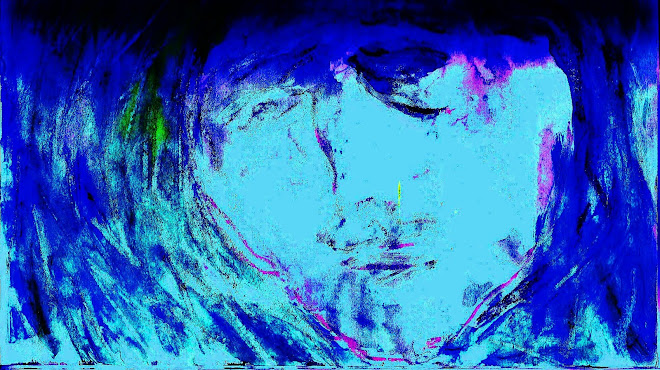
I can see why humanity created religions. I can also see why many feel like all religions are a crock. Two different sides of the same coin.
When you suffer, you need someone out there who is bigger than you to lean on and to blame. You get to feel superior for sucking it up and enduring.
If no one is out there to need or blame, you get to feel like a hero, and thus superior for surviving your plight.
If we subscribe to a higher power, we earn a degree of non-accountability.
If we don't subscribe to a higher power, we still manage to latch onto non-accountability and brush off suffering by declaring: “Life sucks” or “Shit happens.”
Everyone's world comes unhinged at some point, either through tragedy, loss, hardship, illness...something bad happens, maybe even several doozies. We all get decked.
Until we do, we are usually fairly confident in ourselves and in life. Fairly arrogant actually, as though we are above intense suffering and are too privileged to be caught in its path. People who survive violent attacks, illnesses, loss of a job, serious accidents, and bitter divorces all reminisce about how they “never thought it could happen to me.”
If you have never come unhinged, reading this will either feel threatening or silly to you. You'll likely stop reading, not wanting to dwell on the idea of it.
If you are someone who thrives on remaining unhinged, you might think that will give you control over suffering...hardship and adversity on your own terms. You might be making suffering familiar because familiarity feels more comfortable.
Most people wait for the doozies before coming unhinged. And it is there that they will either reach out for some God or reject any God.
It makes sense to live in an avoidance-oriented relationship to suffering. Fun is more fun. Laughter is more laughs. Joy is more joyful. Feeling good feels so much better.
If you were given an assignment for life -- to figure out your suffering –- would you do it? Or would you just blindly accept that suffering is the human lot in life, is non-negotiable, and just press on avoiding it whenever possible?
Christ was given an assignment: to endure suffering for the sake of humanity.
No one argues that the Shroud of Turin bears the image of a crucified man. But lots of people dismiss the Shroud as the burial cloth of Jesus Christ. Still no one can explain how the image got on the cloth. Even if the carbon dating results are true, no one can explain how someone in the Middle Ages could have created the image, given the technologies required were not in existence at that time in history.
So here we have an unsolved mystery that binds science and religion. Yet, it is a mystery that has been ignored by the masses. Even though the Shroud is the most widely studied relic (by a select group), it remains, nonetheless, far from being a household word.
If it is possible this relic contains the answer to transmuting human suffering, will we continue to ignore its significance and opt instead to come unhinged? Or will we make ourselves accountable and explore the mystery?
Sunday, December 27, 2009
Thursday, December 24, 2009
Chapter 5: Oh Holy Night
“Long lay the world in sin and error pining
till He appeared and the soul felt its worth”
It would be pretty hard to live life fully if your soul felt no worth. We yap about the importance of “self esteem,” latching onto our physical image, education, work, and relationships as the primary reflections of it.
But if the soul could not feel its worth, I doubt our self esteem would take us very far. We would always end up inside a void and that emptiness would steadily seep into our perceptions. We would likely live our lives forever falling short, constantly yearning for deeper meaning.
Cloth swaddled Christ at birth
restricting His limbs to ensure proper growth
limbs He would use to reach outward to us
Cloth shrouded Christ at death
absorbing the marks of His suffering and resurrection
leaving a road map to our salvation
In the stillness of the holy night
the light of the Lord suddenly appears
swaddling our souls in worth
till He appeared and the soul felt its worth”
It would be pretty hard to live life fully if your soul felt no worth. We yap about the importance of “self esteem,” latching onto our physical image, education, work, and relationships as the primary reflections of it.
But if the soul could not feel its worth, I doubt our self esteem would take us very far. We would always end up inside a void and that emptiness would steadily seep into our perceptions. We would likely live our lives forever falling short, constantly yearning for deeper meaning.
Cloth swaddled Christ at birth
restricting His limbs to ensure proper growth
limbs He would use to reach outward to us
Cloth shrouded Christ at death
absorbing the marks of His suffering and resurrection
leaving a road map to our salvation
In the stillness of the holy night
the light of the Lord suddenly appears
swaddling our souls in worth

Sunday, December 20, 2009
Chapter 4: Begin the Divine Remedy
As we approach Christmas, it would be logical to say that the birth of Christ is where the Divine Remedy begins. But for me it begins further back, with the story of Mary.
When the Angel Gabriel visited Mary and told her she would bear a son, she naturally had doubt, knowing she was a virgin. Nonetheless, Mary said yes: “I am the Lord's servant; as you have spoken, so be it”; “Behold the handmaid of the Lord; be it unto me according to thy word.”
Mary said yes.
That act of implementing her free will to allow the will of God, is where the Divine Remedy of Christ begins. Mary allowed her physical body to be imprinted with the Holy Spirit via the physical manifestation of the savior child, Jesus Christ. Despite her doubt, she surrendered her will to the will of God, and from that human surrender comes the human/divine connection.
Recently on the news I saw a story about a school district that is using textbooks that have renamed the Biblical historical periods (B.C. And A.D.). The book changes B.C. to BCE, meaning Before Common Era and A.D. to CE, meaning Common Era.
Free will can run in either direction. Mary could have said no. We each get to choose how to implement our free will. Through faith alone, Mary entrusted hers to God. And so began the divine remedy for the mystery of human suffering.
When the Angel Gabriel visited Mary and told her she would bear a son, she naturally had doubt, knowing she was a virgin. Nonetheless, Mary said yes: “I am the Lord's servant; as you have spoken, so be it”; “Behold the handmaid of the Lord; be it unto me according to thy word.”
Mary said yes.
That act of implementing her free will to allow the will of God, is where the Divine Remedy of Christ begins. Mary allowed her physical body to be imprinted with the Holy Spirit via the physical manifestation of the savior child, Jesus Christ. Despite her doubt, she surrendered her will to the will of God, and from that human surrender comes the human/divine connection.
Recently on the news I saw a story about a school district that is using textbooks that have renamed the Biblical historical periods (B.C. And A.D.). The book changes B.C. to BCE, meaning Before Common Era and A.D. to CE, meaning Common Era.
Free will can run in either direction. Mary could have said no. We each get to choose how to implement our free will. Through faith alone, Mary entrusted hers to God. And so began the divine remedy for the mystery of human suffering.
Saturday, December 19, 2009
About Chapter 3
For thirty years I lived with the underlying assumption that I was in control of much in myself and in my life. Then my entire identity collapsed, when I learned that I was not the man I thought I was. Even more unnerving--learning that I originate from an unsolved mystery (the Shroud of Turin).
I used to believe that it was in my power to remedy my own suffering. In some respects, I was successful. It seemed logical, the notion that human suffering would respond and be resolved via human remedy.
The idea of relinquishing my free will never really crossed my mind. Biblically, our free will is what sets us apart from all other species. I always perceived it as something to covet and cultivate. And it is...up to a point. And then the trails goes cold.
Human remedies can only take us so far. If we wish to transcend the implications of human suffering, we must venture through and beyond our habitual human remedies for it. This blog is just one vehicle for that wandering.
I used to believe that it was in my power to remedy my own suffering. In some respects, I was successful. It seemed logical, the notion that human suffering would respond and be resolved via human remedy.
The idea of relinquishing my free will never really crossed my mind. Biblically, our free will is what sets us apart from all other species. I always perceived it as something to covet and cultivate. And it is...up to a point. And then the trails goes cold.
Human remedies can only take us so far. If we wish to transcend the implications of human suffering, we must venture through and beyond our habitual human remedies for it. This blog is just one vehicle for that wandering.
Chapter 3: The Human Remedy
Chapter 3: The Human Remedy
when suffering knocks
we open the door
game on
defy don't comply
avoid deny
le grand au revoir
vinegar and sarcasm
victimization
free will my ass
quick run and hide
ward off deflect
pray for mercy
endure
give love
laugh play
blink drink think
medicate fornicate suffocate
escape vanish
wish hope
imagine daydream
refuse it abuse it lose it
shake it make it break it
fake it placate it
rages cages
anger aggression
silence violence
angst
survivor mode
no pain no gain
anguish
we shall overcome
by
doing doing doing doing
until we finally cave and admit that
God willing
death will be our way out
our salvation
hard knocks change locks throw rocks
paralysis sleep
lethargy weakness
surrender
seized
by its forces and furies
under its spell and reign
alienation isolation
condemnation frustration
shut down our operating system
stop freeze
give up give in
indulge in it
satisfy its urges and cravings
fight it push it
challenge it mock it
open a can of whoop ass on it
serve it
charity selflessness
make a difference
remodel revamp
reinvent redefine
remember relive regress
regret
rectify reconcile
press fast forward
persevere
soldier on march on
explore adventure
get spiritual
take sabbaticals
go on walk abouts
silver linings new beginnings
fear creates
our worst case scenarios
fear destroys
our best case scenarios
and tumble tumble we fall
into patterns
habitual responses
temporary control mechanisms
for forces we know we cannot contain
yet try and try we do in vain
when suffering knocks
we open the door
game on
defy don't comply
avoid deny
le grand au revoir
vinegar and sarcasm
victimization
free will my ass
quick run and hide
ward off deflect
pray for mercy
endure
give love
laugh play
blink drink think
medicate fornicate suffocate
escape vanish
wish hope
imagine daydream
refuse it abuse it lose it
shake it make it break it
fake it placate it
rages cages
anger aggression
silence violence
angst
survivor mode
no pain no gain
anguish
we shall overcome
by
doing doing doing doing
until we finally cave and admit that
God willing
death will be our way out
our salvation
hard knocks change locks throw rocks
paralysis sleep
lethargy weakness
surrender
seized
by its forces and furies
under its spell and reign
alienation isolation
condemnation frustration
shut down our operating system
stop freeze
give up give in
indulge in it
satisfy its urges and cravings
fight it push it
challenge it mock it
open a can of whoop ass on it
serve it
charity selflessness
make a difference
remodel revamp
reinvent redefine
remember relive regress
regret
rectify reconcile
press fast forward
persevere
soldier on march on
explore adventure
get spiritual
take sabbaticals
go on walk abouts
silver linings new beginnings
fear creates
our worst case scenarios
fear destroys
our best case scenarios
and tumble tumble we fall
into patterns
habitual responses
temporary control mechanisms
for forces we know we cannot contain
yet try and try we do in vain
Wednesday, December 16, 2009
About Chapter 2
About Chapter 2
Imagine a neighboring planet to ours that is inhabited by a people who never experience suffering. They live peacefully, fluctuating between contentment and joy, never encountering pain or hardships. Now imagine your space ship accidentally crashed on their planet and you were stuck there for the rest of your life. At first, it might all seem peachy. But over time...how would you relate to these people who know nothing of the suffering of life?
The point is: We earth types share a common bond. We can each relate to the need to complain about the hard day at work, or pine over the love lost, or ache from grief at the death of a loved one. It's part of the human condition to suffer and, in some way, we feed off of it, in ourselves and with each other. It's an integral part of the life force. But our relationship to it is what has become skewed.
Next time something is making you suffer...imagine yourself on that planet, with no one there to relate to your pain. No one who is capable of listening with empathy or sympathy. No one else who is experiencing any suffering but you...
Ironically, this condition that we all have in common, human suffering, is also the condition that so often tears us apart and alienates us from one another. The commonality that should help us relate to one another, instead often manifests as an oppositional force that divides.
We are all in this together. And that bond is much richer than we realize.
Imagine a neighboring planet to ours that is inhabited by a people who never experience suffering. They live peacefully, fluctuating between contentment and joy, never encountering pain or hardships. Now imagine your space ship accidentally crashed on their planet and you were stuck there for the rest of your life. At first, it might all seem peachy. But over time...how would you relate to these people who know nothing of the suffering of life?
The point is: We earth types share a common bond. We can each relate to the need to complain about the hard day at work, or pine over the love lost, or ache from grief at the death of a loved one. It's part of the human condition to suffer and, in some way, we feed off of it, in ourselves and with each other. It's an integral part of the life force. But our relationship to it is what has become skewed.
Next time something is making you suffer...imagine yourself on that planet, with no one there to relate to your pain. No one who is capable of listening with empathy or sympathy. No one else who is experiencing any suffering but you...
Ironically, this condition that we all have in common, human suffering, is also the condition that so often tears us apart and alienates us from one another. The commonality that should help us relate to one another, instead often manifests as an oppositional force that divides.
We are all in this together. And that bond is much richer than we realize.
Chapter 2: The Shared Sustenance
Chapter 2: The Shared Sustenance
It is the human condition...
It morphs constantly to lure
our perspective towards its focus.
It flies into the eyes of starving children.
It is the wheelchair that carts around chronic pain.
It is the grip of loneliness, the hours of anxiety,
the noose of suicide.
The current upper class version of it
is called depression.
We label what we don't understand
in an effort to control it
and make it our own.
But we have no ownership rights
over our own condition.
It owns us, clinging like a dense fog
over our molecules, atoms, genes, DNA,
particles, energy, and life force.
We name it:
Bad – Negative – Dark – Wrong – Evil – Doom & Gloom.
It is still in charge
and can descend at any hour.
It's opposite is what allows us
to fully experience its depth.
It is the veil that shrouds the light.
It is the transparency that cloaks our fright.
It is part of the temporary, the grand illusion,
the changeling, the Houdini.
It is the paramount of the not real
because it feels and functions
as the most real thing we experience.
It is the human condition...
It is the human condition...
It morphs constantly to lure
our perspective towards its focus.
It flies into the eyes of starving children.
It is the wheelchair that carts around chronic pain.
It is the grip of loneliness, the hours of anxiety,
the noose of suicide.
The current upper class version of it
is called depression.
We label what we don't understand
in an effort to control it
and make it our own.
But we have no ownership rights
over our own condition.
It owns us, clinging like a dense fog
over our molecules, atoms, genes, DNA,
particles, energy, and life force.
We name it:
Bad – Negative – Dark – Wrong – Evil – Doom & Gloom.
It is still in charge
and can descend at any hour.
It's opposite is what allows us
to fully experience its depth.
It is the veil that shrouds the light.
It is the transparency that cloaks our fright.
It is part of the temporary, the grand illusion,
the changeling, the Houdini.
It is the paramount of the not real
because it feels and functions
as the most real thing we experience.
It is the human condition...
Subscribe to:
Posts (Atom)