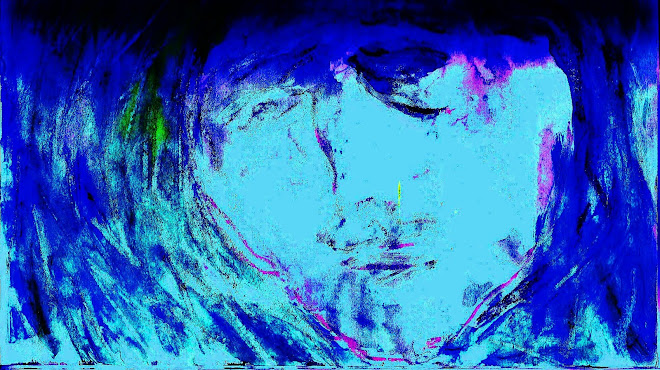
It seems whenever we ignore suffering, we are forced up against it. Take Haiti — even with all the charitable efforts, the country remained one the poorest places on earth. But that goes essentially ignored until a massive earthquake strikes and the world is forced to face that a large part of a county's population is now homeless and without medical help, food, and water. One huge natural disaster (requiring immediate attention) piled on top of one already huge human disaster (that never received adequate attention).
It must be very frustrating for the people who have lived in and traveled to Haiti on charitable missions to realize that so much of the good they did is now buried in the rubble. Their hospitals, schools, churches, and sanctuaries have been destroyed. Many of the people they were able to help are now dead.
Talk about feeling punished by God... imagine living your entire life in abject poverty in a crime ridden, corrupt country and then, without warning, the city crumbles at your feet and you are left with no loved ones, no home, no food, no water, no medical care, nothing.
Who is to blame? God? Voodoo? Corruption? Human disregard? Is blame even relevant? Have we come face to face with the alter ego of the Creator — the Destroyer? What will He create in us out of this destruction?
From our sanctuaries we pour money into the Red Cross, the Salvation Army and telethons. We feel so helpless and guilty. We fear we could be under rubble ourselves one day. We count our blessings and give thanks and praise. We ask for an explanation. Silence...
We follow the story in the news. The media gives us doses of fear and dread until they know we need to move on to the sentimentality of the tales of dramatic rescues (they are well aware we need to hear happy endings).
We give the media control over our fears and hopes so that we get a balance of both and are not overwhelmed by any of it. We can only suffer vicariously for so long before we weaken.
We are not the ones living this hell. We are not, right this moment, wandering the streets of Port-au-Prince, covered in dust, breathing in the stench of death, thirsting, and searching for our loved ones. That's not our suffering job, not for today anyway.
We cannot perceive, philosophize or intellectualize all the answers.We go on faith alone. Is faith harder in Haiti? Faith during disaster may actually in some ways be easier because, more than ever, you need God. But I'm sure many of the faithful there would also be feeling tested and abandoned by God.
Is our faith strengthened as we watch from afar, ensconced in the safety and warmth of our homes and privileged lives? Do we renew our faith out of fear of the wrath of God or out of genuine thanks for all we have? Maybe both.
Charity in the rubble gives us pause. We want to be better, to do good, to give, to help total strangers. But will we humble ourselves to trust and need God? Or is our need for control so insidious and our arrogance so ingrained that we really believe our 'rush in to rescue' will make any lasting change?
Of course the rescuing needs to be done, but the larger, deeper picture also must be addressed. History shows us we are not very good at fixing human greed and selfishness. We are only experts at repeating it.
Christianity says we suffer because we have separated ourselves from God. We do not suffer alone though. Christ took it all on and suffered more than any of us (because he took on the accumulation of all human suffering for our specie's entire existence). But that concept is very difficult for us to process.
It does not surprise me that the Shroud of Turin has gone largely ignored. Because Christ suffered so long ago, it's hard for us to relate to the sacrifice He made, much less an image of it.
Even when we suffer, we seldom remember to reflect on Christ's suffering. Have we left God behind, buried in the rubble and floating in the dust? Perhaps that is the 'why' to ponder.
I have come to realize that the underlying message of the image on the Shroud is for us to trust in the mystery of God. The moment we trust God is the moment He comes to lives inside us.
It is interesting that Mother Teresa, one of the most charitable people in the world, privately endured an acute experience of the wound of separation from God. Her letters reveal a woman who, tormented by a sense of abandonment by God, nonetheless trusted God and worked tirelessly to bring His light to others.
Yet, it is not just our do-good efforts that bring us closer to God. Charity alone is not what heals the wound of separation. Charity too was buried in the rubble.
Whether we like to admit it or not, suffering is what brings us closest to God (or severs the relationship entirely). The choice to trust Him is ours. Puny as we are in the larger scheme of things, humankind is graced with the free will to choose to accept or refuse a personal relationship with God.
It is inspiring to witness how so many Haitians, in the midst of extreme suffering, are nonetheless trusting God and choosing to have Him live inside them.
Tuesday, January 19, 2010
Tuesday, January 12, 2010
Chapter 8: Let There Be Light
When we add up all the suffering we encounter in our lifetime it's a hefty dose. It includes:
Our own, experiential suffering (to include all of our physical, emotional, psychological, mental, and spiritual suffering).
The suffering of those we love, which causes us to suffer vicariously because we cannot normally do much to alleviate theirs.
The suffering of others we hear of in the news, all around the globe every single day. On some level, we take on a modicum of that suffering too. We count our blessings, get mad at world leaders, complain, play the blame game, become activists, volunteer, vote... because that's about the best we can do to have any influence.
When we imagine the exponential suffering that Christ took on for the entirety of mankind, we really cannot fathom it. It is far too vast and all encompassing. It does not seem “humanly” possible, and yet He was a man.
But he was also a man who was associated with light, namely a halo. He was surrounded by light and emitted light to the world. Is it any coincidence that God said “Let there be light”? Is light the ultimate elixir for the alchemy of transmuting human suffering? Jesus said: “I am the resurrection and the light.”
And is it ever truly dark? Even the night sky is graced with light from the stars, other planets, and the moon.
In our darkest hours, when we most need God's light to shine inside us, how do we let it in? I don't think it's just a matter of prayer.
The Shroud is evidence of the suffering of a crucified man. No one argues that. So, at the very least, when we look at the image we know that the suffering Christ endured must have been severe.
If we believe that Christ died for our sins (and went through extreme suffering in order to do so) then it would be logical for us to wonder if our suffering isn't some kind of payback. Let's face it, we are pretty pathetic when you consider all the manifestations of our dark side. But that doesn't add up because Christ would not have needed to die for our sins if God's plan was to make us suffer for them anyway.
So if we believe Christ died for our sins because He knew that was our only hope for salvation, then it shouldn't be too hard to accept that we are already essentially forgiven. But even if we believe and accept that He died for our sins and we are forgiven, it still is up to us to flip that switch and have His light shine inside us. That's where our free will enters into the picture. It is up to us to choose to allow Him to live inside us. It won't happen unless we say it's okay.
Pretty cool when you think about it. He's not force feeding us His love. We get to decide if we want to accept His gift.
Our own, experiential suffering (to include all of our physical, emotional, psychological, mental, and spiritual suffering).
The suffering of those we love, which causes us to suffer vicariously because we cannot normally do much to alleviate theirs.
The suffering of others we hear of in the news, all around the globe every single day. On some level, we take on a modicum of that suffering too. We count our blessings, get mad at world leaders, complain, play the blame game, become activists, volunteer, vote... because that's about the best we can do to have any influence.
When we imagine the exponential suffering that Christ took on for the entirety of mankind, we really cannot fathom it. It is far too vast and all encompassing. It does not seem “humanly” possible, and yet He was a man.
But he was also a man who was associated with light, namely a halo. He was surrounded by light and emitted light to the world. Is it any coincidence that God said “Let there be light”? Is light the ultimate elixir for the alchemy of transmuting human suffering? Jesus said: “I am the resurrection and the light.”
And is it ever truly dark? Even the night sky is graced with light from the stars, other planets, and the moon.
In our darkest hours, when we most need God's light to shine inside us, how do we let it in? I don't think it's just a matter of prayer.
The Shroud is evidence of the suffering of a crucified man. No one argues that. So, at the very least, when we look at the image we know that the suffering Christ endured must have been severe.
If we believe that Christ died for our sins (and went through extreme suffering in order to do so) then it would be logical for us to wonder if our suffering isn't some kind of payback. Let's face it, we are pretty pathetic when you consider all the manifestations of our dark side. But that doesn't add up because Christ would not have needed to die for our sins if God's plan was to make us suffer for them anyway.
So if we believe Christ died for our sins because He knew that was our only hope for salvation, then it shouldn't be too hard to accept that we are already essentially forgiven. But even if we believe and accept that He died for our sins and we are forgiven, it still is up to us to flip that switch and have His light shine inside us. That's where our free will enters into the picture. It is up to us to choose to allow Him to live inside us. It won't happen unless we say it's okay.
Pretty cool when you think about it. He's not force feeding us His love. We get to decide if we want to accept His gift.

Friday, January 1, 2010
Chapter 7: Resolution
My favorite part of making stained glass windows is the beginning of a new project. I go to the client's location and see where the window is to be placed and how it will interact with the influences of light, both natural and artificial. Then I start thinking about colors and shapes and how they will relate to the light and the space.
The creative process begins the same way New Year's resolutions begin: with a fresh start.
The daily grind presses on. All our time seems spent in work and working out our troubles. Days and nights continue to bleed us.
A new year arrives and we start planning resolutions--relief from the grind. We set new goals and get geared up to make changes in our lives that will ostensibly make us happier.
A few months go by and then we wind down, start back into our old bad habits, and repeat the cycle. We push that rock up the hill, only to watch it roll back down yet again.
Our relationship to life exists primarily in doing, less than in allowing. It's less scary to just stay busy. Staying busy occupies our minds and calms our emotions. The days go by and we get things done. Allowing feels too passive. We like to be proactive, incite change, move forward. Doing makes us feel in control.
But doing is actually something of a trap.
At the end of every task, we often feel let down. Even if we met our expectations, there is this “What's next” feeling. What will be the next thing that temporarily fills the void until we are done with it and feel the trap closing in on us again.
Allowing is more like watching dust particles or steam interacting with a shaft of sunlight coming through a window. The shaft of light creates what looks like a contained space, a solid structure within which the particles or vapors morph. But then the shaft of light moves to a new angle and the entire dynamic changes.
Our lives are very much like that shaft of light. We impose certain structures on our living, but they are only temporary. We morph inside and beyond the edges of what we consider to be a contained space. And then that source of containment turns into something else entirely and the dynamics change again.
The image on the Shroud is no different. When you look at the image on the cloth and then the photographic negative, for example, you see that the eye is being fooled. The cloth allows the mystery.
Is a resolution just another task on your to do list of all the doing for the new year?
If the course of action you decide on is to allow, that does not mean you just sit around all day waiting for things to happen. You still do all you set out to to do, but your relationship to doing changes. You become less expectation-oriented. You relinquish some of the control. You put forth your best efforts and intentions and then let go.
You allow the mystery of your life.
The creative process begins the same way New Year's resolutions begin: with a fresh start.
The daily grind presses on. All our time seems spent in work and working out our troubles. Days and nights continue to bleed us.
A new year arrives and we start planning resolutions--relief from the grind. We set new goals and get geared up to make changes in our lives that will ostensibly make us happier.
A few months go by and then we wind down, start back into our old bad habits, and repeat the cycle. We push that rock up the hill, only to watch it roll back down yet again.
Our relationship to life exists primarily in doing, less than in allowing. It's less scary to just stay busy. Staying busy occupies our minds and calms our emotions. The days go by and we get things done. Allowing feels too passive. We like to be proactive, incite change, move forward. Doing makes us feel in control.
But doing is actually something of a trap.
At the end of every task, we often feel let down. Even if we met our expectations, there is this “What's next” feeling. What will be the next thing that temporarily fills the void until we are done with it and feel the trap closing in on us again.
Allowing is more like watching dust particles or steam interacting with a shaft of sunlight coming through a window. The shaft of light creates what looks like a contained space, a solid structure within which the particles or vapors morph. But then the shaft of light moves to a new angle and the entire dynamic changes.
Our lives are very much like that shaft of light. We impose certain structures on our living, but they are only temporary. We morph inside and beyond the edges of what we consider to be a contained space. And then that source of containment turns into something else entirely and the dynamics change again.
The image on the Shroud is no different. When you look at the image on the cloth and then the photographic negative, for example, you see that the eye is being fooled. The cloth allows the mystery.
Is a resolution just another task on your to do list of all the doing for the new year?
If the course of action you decide on is to allow, that does not mean you just sit around all day waiting for things to happen. You still do all you set out to to do, but your relationship to doing changes. You become less expectation-oriented. You relinquish some of the control. You put forth your best efforts and intentions and then let go.
You allow the mystery of your life.
Sunday, December 27, 2009
Chapter 6: Unhinged
I can see why humanity created religions. I can also see why many feel like all religions are a crock. Two different sides of the same coin.
When you suffer, you need someone out there who is bigger than you to lean on and to blame. You get to feel superior for sucking it up and enduring.
If no one is out there to need or blame, you get to feel like a hero, and thus superior for surviving your plight.
If we subscribe to a higher power, we earn a degree of non-accountability.
If we don't subscribe to a higher power, we still manage to latch onto non-accountability and brush off suffering by declaring: “Life sucks” or “Shit happens.”
Everyone's world comes unhinged at some point, either through tragedy, loss, hardship, illness...something bad happens, maybe even several doozies. We all get decked.
Until we do, we are usually fairly confident in ourselves and in life. Fairly arrogant actually, as though we are above intense suffering and are too privileged to be caught in its path. People who survive violent attacks, illnesses, loss of a job, serious accidents, and bitter divorces all reminisce about how they “never thought it could happen to me.”
If you have never come unhinged, reading this will either feel threatening or silly to you. You'll likely stop reading, not wanting to dwell on the idea of it.
If you are someone who thrives on remaining unhinged, you might think that will give you control over suffering...hardship and adversity on your own terms. You might be making suffering familiar because familiarity feels more comfortable.
Most people wait for the doozies before coming unhinged. And it is there that they will either reach out for some God or reject any God.
It makes sense to live in an avoidance-oriented relationship to suffering. Fun is more fun. Laughter is more laughs. Joy is more joyful. Feeling good feels so much better.
If you were given an assignment for life -- to figure out your suffering –- would you do it? Or would you just blindly accept that suffering is the human lot in life, is non-negotiable, and just press on avoiding it whenever possible?
Christ was given an assignment: to endure suffering for the sake of humanity.
No one argues that the Shroud of Turin bears the image of a crucified man. But lots of people dismiss the Shroud as the burial cloth of Jesus Christ. Still no one can explain how the image got on the cloth. Even if the carbon dating results are true, no one can explain how someone in the Middle Ages could have created the image, given the technologies required were not in existence at that time in history.
So here we have an unsolved mystery that binds science and religion. Yet, it is a mystery that has been ignored by the masses. Even though the Shroud is the most widely studied relic (by a select group), it remains, nonetheless, far from being a household word.
If it is possible this relic contains the answer to transmuting human suffering, will we continue to ignore its significance and opt instead to come unhinged? Or will we make ourselves accountable and explore the mystery?
When you suffer, you need someone out there who is bigger than you to lean on and to blame. You get to feel superior for sucking it up and enduring.
If no one is out there to need or blame, you get to feel like a hero, and thus superior for surviving your plight.
If we subscribe to a higher power, we earn a degree of non-accountability.
If we don't subscribe to a higher power, we still manage to latch onto non-accountability and brush off suffering by declaring: “Life sucks” or “Shit happens.”
Everyone's world comes unhinged at some point, either through tragedy, loss, hardship, illness...something bad happens, maybe even several doozies. We all get decked.
Until we do, we are usually fairly confident in ourselves and in life. Fairly arrogant actually, as though we are above intense suffering and are too privileged to be caught in its path. People who survive violent attacks, illnesses, loss of a job, serious accidents, and bitter divorces all reminisce about how they “never thought it could happen to me.”
If you have never come unhinged, reading this will either feel threatening or silly to you. You'll likely stop reading, not wanting to dwell on the idea of it.
If you are someone who thrives on remaining unhinged, you might think that will give you control over suffering...hardship and adversity on your own terms. You might be making suffering familiar because familiarity feels more comfortable.
Most people wait for the doozies before coming unhinged. And it is there that they will either reach out for some God or reject any God.
It makes sense to live in an avoidance-oriented relationship to suffering. Fun is more fun. Laughter is more laughs. Joy is more joyful. Feeling good feels so much better.
If you were given an assignment for life -- to figure out your suffering –- would you do it? Or would you just blindly accept that suffering is the human lot in life, is non-negotiable, and just press on avoiding it whenever possible?
Christ was given an assignment: to endure suffering for the sake of humanity.
No one argues that the Shroud of Turin bears the image of a crucified man. But lots of people dismiss the Shroud as the burial cloth of Jesus Christ. Still no one can explain how the image got on the cloth. Even if the carbon dating results are true, no one can explain how someone in the Middle Ages could have created the image, given the technologies required were not in existence at that time in history.
So here we have an unsolved mystery that binds science and religion. Yet, it is a mystery that has been ignored by the masses. Even though the Shroud is the most widely studied relic (by a select group), it remains, nonetheless, far from being a household word.
If it is possible this relic contains the answer to transmuting human suffering, will we continue to ignore its significance and opt instead to come unhinged? Or will we make ourselves accountable and explore the mystery?
Thursday, December 24, 2009
Chapter 5: Oh Holy Night
“Long lay the world in sin and error pining
till He appeared and the soul felt its worth”
It would be pretty hard to live life fully if your soul felt no worth. We yap about the importance of “self esteem,” latching onto our physical image, education, work, and relationships as the primary reflections of it.
But if the soul could not feel its worth, I doubt our self esteem would take us very far. We would always end up inside a void and that emptiness would steadily seep into our perceptions. We would likely live our lives forever falling short, constantly yearning for deeper meaning.
Cloth swaddled Christ at birth
restricting His limbs to ensure proper growth
limbs He would use to reach outward to us
Cloth shrouded Christ at death
absorbing the marks of His suffering and resurrection
leaving a road map to our salvation
In the stillness of the holy night
the light of the Lord suddenly appears
swaddling our souls in worth
till He appeared and the soul felt its worth”
It would be pretty hard to live life fully if your soul felt no worth. We yap about the importance of “self esteem,” latching onto our physical image, education, work, and relationships as the primary reflections of it.
But if the soul could not feel its worth, I doubt our self esteem would take us very far. We would always end up inside a void and that emptiness would steadily seep into our perceptions. We would likely live our lives forever falling short, constantly yearning for deeper meaning.
Cloth swaddled Christ at birth
restricting His limbs to ensure proper growth
limbs He would use to reach outward to us
Cloth shrouded Christ at death
absorbing the marks of His suffering and resurrection
leaving a road map to our salvation
In the stillness of the holy night
the light of the Lord suddenly appears
swaddling our souls in worth
Sunday, December 20, 2009
Chapter 4: Begin the Divine Remedy
As we approach Christmas, it would be logical to say that the birth of Christ is where the Divine Remedy begins. But for me it begins further back, with the story of Mary.
When the Angel Gabriel visited Mary and told her she would bear a son, she naturally had doubt, knowing she was a virgin. Nonetheless, Mary said yes: “I am the Lord's servant; as you have spoken, so be it”; “Behold the handmaid of the Lord; be it unto me according to thy word.”
Mary said yes.
That act of implementing her free will to allow the will of God, is where the Divine Remedy of Christ begins. Mary allowed her physical body to be imprinted with the Holy Spirit via the physical manifestation of the savior child, Jesus Christ. Despite her doubt, she surrendered her will to the will of God, and from that human surrender comes the human/divine connection.
Recently on the news I saw a story about a school district that is using textbooks that have renamed the Biblical historical periods (B.C. And A.D.). The book changes B.C. to BCE, meaning Before Common Era and A.D. to CE, meaning Common Era.
Free will can run in either direction. Mary could have said no. We each get to choose how to implement our free will. Through faith alone, Mary entrusted hers to God. And so began the divine remedy for the mystery of human suffering.
When the Angel Gabriel visited Mary and told her she would bear a son, she naturally had doubt, knowing she was a virgin. Nonetheless, Mary said yes: “I am the Lord's servant; as you have spoken, so be it”; “Behold the handmaid of the Lord; be it unto me according to thy word.”
Mary said yes.
That act of implementing her free will to allow the will of God, is where the Divine Remedy of Christ begins. Mary allowed her physical body to be imprinted with the Holy Spirit via the physical manifestation of the savior child, Jesus Christ. Despite her doubt, she surrendered her will to the will of God, and from that human surrender comes the human/divine connection.
Recently on the news I saw a story about a school district that is using textbooks that have renamed the Biblical historical periods (B.C. And A.D.). The book changes B.C. to BCE, meaning Before Common Era and A.D. to CE, meaning Common Era.
Free will can run in either direction. Mary could have said no. We each get to choose how to implement our free will. Through faith alone, Mary entrusted hers to God. And so began the divine remedy for the mystery of human suffering.
Saturday, December 19, 2009
About Chapter 3
For thirty years I lived with the underlying assumption that I was in control of much in myself and in my life. Then my entire identity collapsed, when I learned that I was not the man I thought I was. Even more unnerving--learning that I originate from an unsolved mystery (the Shroud of Turin).
I used to believe that it was in my power to remedy my own suffering. In some respects, I was successful. It seemed logical, the notion that human suffering would respond and be resolved via human remedy.
The idea of relinquishing my free will never really crossed my mind. Biblically, our free will is what sets us apart from all other species. I always perceived it as something to covet and cultivate. And it is...up to a point. And then the trails goes cold.
Human remedies can only take us so far. If we wish to transcend the implications of human suffering, we must venture through and beyond our habitual human remedies for it. This blog is just one vehicle for that wandering.
I used to believe that it was in my power to remedy my own suffering. In some respects, I was successful. It seemed logical, the notion that human suffering would respond and be resolved via human remedy.
The idea of relinquishing my free will never really crossed my mind. Biblically, our free will is what sets us apart from all other species. I always perceived it as something to covet and cultivate. And it is...up to a point. And then the trails goes cold.
Human remedies can only take us so far. If we wish to transcend the implications of human suffering, we must venture through and beyond our habitual human remedies for it. This blog is just one vehicle for that wandering.
Subscribe to:
Posts (Atom)